




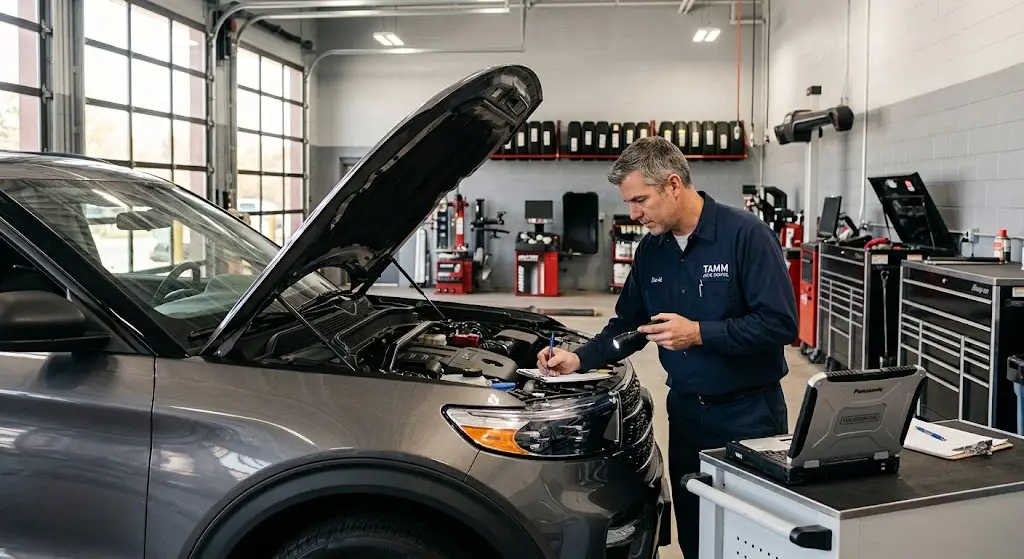
Modern vehicles combine mechanical components, electronics, sensors, computer-controlled systems, tires, brakes, fluids, and increasingly sophisticated safety technology. That makes regular maintenance and accurate diagnosis important parts of responsible vehicle ownership.
This guide explains what drivers should look for when evaluating Tamm Auto Service, the most important areas of vehicle maintenance, common warning signs, questions to ask before approving repairs, and practical ways to compare automotive service providers.
Quick answer: Reliable auto service should combine preventive maintenance, accurate diagnostics, qualified technicians, clear communication, appropriate parts and fluids, transparent estimates, and documented repairs. The vehicle manufacturer’s maintenance schedule should remain the starting point for routine service.
What Is Tamm Auto Service?
Tamm Auto Service is the subject of this automotive care guide. For someone researching an auto service provider, the most useful approach is to evaluate the quality of the service process rather than rely only on a business name or a low advertised price.
A dependable automotive service process generally starts with understanding the driver’s concern. The vehicle can then be inspected or diagnosed, the findings explained, and appropriate repair or maintenance options presented before work is authorized.
This approach is particularly valuable when the symptoms involve brakes, steering, tires, warning lights, engine performance, fluid leaks, starting problems, or other systems that can affect safety or reliability.
Why Regular Auto Service Matters
Routine vehicle maintenance can help owners identify wear and developing problems before they become more disruptive. NHTSA recommends following the manufacturer’s maintenance recommendations and paying attention to important areas such as tires and fluid levels.
Maintenance should not be viewed as a one-size-fits-all checklist. A vehicle’s age, mileage, manufacturer, driving conditions, climate, towing requirements, and usage pattern can all influence what service is appropriate.
For that reason, a quality auto service provider should help the driver understand the condition of the actual vehicle rather than automatically recommending the same work to every customer.
Core Services to Consider When Choosing an Auto Service Provider
The exact services offered by Tamm Auto Service should be confirmed directly with the business. However, drivers evaluating an automotive repair provider should understand the major categories of vehicle care.
1. Preventive Maintenance
Preventive maintenance is designed to keep a vehicle operating properly and identify wear before it develops into a larger problem. Depending on the vehicle, this can include oil and filter service, fluid checks, scheduled inspections, battery testing, belt and hose inspection, and other manufacturer-recommended maintenance.
The owner’s manual should be the primary reference for service intervals. Drivers should be especially cautious about applying generic mileage rules when their vehicle manufacturer provides a different schedule.
2. Brake Service
Brakes are a critical safety system. Grinding, squealing, vibration, pulling, a soft pedal, or a noticeable change in stopping performance should not be ignored.
A professional inspection should identify the underlying cause before replacement parts are recommended. Depending on the problem, brake service may involve pads, rotors, calipers, hydraulic components, brake fluid, or other related parts.
3. Tire Service
Tires affect traction, braking, handling, ride quality, and fuel efficiency. NHTSA recommends regular checks of tire pressure, tread condition, damage, rotation, balancing, and alignment.
Drivers should use the vehicle manufacturer’s recommended inflation pressure, normally found on the driver’s door placard or in the owner’s manual, rather than simply using the maximum pressure printed on the tire.
For more information about this area of vehicle care, readers can explore tire and auto service.
4. Vehicle Diagnostics
Modern vehicles use electronic control modules and sensors to monitor many systems. When a warning light appears, the light itself does not necessarily identify the failed component.
Proper diagnostics can help determine the underlying cause and reduce the risk of replacing parts unnecessarily. This is particularly important when a vehicle has an intermittent problem that is difficult to reproduce.
5. Battery and Starting-System Checks
Starting problems can result from a weak battery, charging-system issue, starter problem, electrical fault, or another underlying condition.
A battery test can provide useful information, but a complete starting or charging concern may require checking several components. Replacing the battery without investigating repeated starting problems may not solve the actual issue.
6. Fluid and Filter Maintenance
Engine oil, coolant, brake fluid, transmission fluid, and other vehicle fluids perform different functions. Their inspection and replacement intervals vary by vehicle.
NHTSA recommends checking applicable fluid levels and addressing signs of leakage, particularly before long trips.
Signs Your Vehicle May Need Service
Many vehicle problems provide warning signs before they become major failures. Drivers should pay attention to changes from normal vehicle behavior.
- Dashboard warning lights appear.
- The engine develops unusual noises or vibrations.
- Braking feels different.
- The steering wheel vibrates.
- The vehicle pulls left or right.
- Tires show uneven tread wear.
- The vehicle becomes difficult to start.
- Fuel economy changes unexpectedly.
- Unusual smells appear while driving.
- Fluid spots appear underneath the vehicle.
- The vehicle’s handling changes.
- Air conditioning or heating performance declines.
None of these symptoms automatically identifies a particular repair. They are reasons to investigate the vehicle rather than guess at the cause.
Preventive Maintenance vs. Emergency Repair
Preventive maintenance and emergency repair serve different purposes. Preventive maintenance is planned around the vehicle’s requirements, while emergency repair usually happens after a component develops a significant problem.
Good maintenance cannot prevent every mechanical failure, but it can help identify wear, fluid problems, tire issues, and other developing concerns earlier.
For example, NHTSA explains that proper tire pressure and maintenance are important for safety and can also help tires last longer.
Drivers should still avoid approving maintenance solely because a service sounds preventative. Ask what the vehicle manufacturer recommends and what inspection evidence supports the recommendation.
How to Evaluate Tamm Auto Service
When researching Tamm Auto Service, drivers should consider several factors rather than judging the provider by price alone.
Technical Knowledge
Modern vehicles require knowledge of both mechanical and electronic systems. When appropriate, ask whether technicians have experience with your particular vehicle make, model, engine, drivetrain, and technology.
Diagnostic Process
A trustworthy repair provider should be able to explain how a problem was identified. This is particularly important when the recommended repair is expensive.
Clear Estimates
Before approving significant work, ask what the estimate includes. A clear estimate helps distinguish labor, parts, diagnostic charges, and any other applicable costs.
Communication
Good communication makes automotive repairs easier to understand. Customers should be able to ask why a repair is necessary, whether it is urgent, and what could happen if the repair is postponed.
Service Documentation
Keeping records of completed work can help owners understand their vehicle’s maintenance history. It can also provide useful information to a future technician when diagnosing recurring problems.
What Questions Should You Ask Before a Repair?
You do not need to be a mechanic to make better repair decisions. A few straightforward questions can provide much more clarity.
- What caused the problem?
- How was the problem diagnosed?
- Is the repair urgent?
- Can the vehicle safely be driven before the repair?
- What could happen if the repair is delayed?
- Which components need replacement?
- Are there multiple repair options?
- What parts will be used?
- Is the work covered by a warranty?
- Will additional repairs require my approval?
These questions help separate an evidence-based repair recommendation from a vague suggestion.
Tire Maintenance Should Be Part of Every Car Care Plan
Tire maintenance deserves special attention because tires provide the vehicle’s contact with the road. NHTSA recommends checking tire pressure at least monthly and inspecting tread and tire condition regularly.
Drivers should also watch for cuts, cracks, bulges, punctures, irregular wear, vibration, and other changes. NHTSA notes that proper tire maintenance can improve safety, tire life, and fuel economy.
Wheel alignment and balancing may also be appropriate when symptoms or inspection results indicate a problem. Drivers should follow the vehicle manufacturer’s recommendations for tire rotation and related maintenance.
For another vehicle-care resource, see Lemoore Tire and auto service guidance.
Auto Service for Older Vehicles
Older vehicles can require more careful maintenance because components accumulate mileage and age. However, age alone does not mean every component needs immediate replacement.
The better approach is to evaluate the vehicle’s current condition, service history, expected use, repair costs, and reliability. A thorough inspection can help prioritize work based on safety and necessity.
Drivers researching other vehicle-care providers can also read Andy’s Auto Service and vehicle care and Lowry Auto Service and preventive vehicle care.
Auto Service for Modern Vehicles
Newer vehicles can contain advanced driver-assistance systems, computerized engine controls, electronic modules, sensors, cameras, and other technology.
That means a repair provider may need specialized diagnostic equipment and current technical knowledge. A warning light or electronic fault should be approached as a diagnostic problem rather than an automatic instruction to replace a specific component.
Owners of technology-heavy vehicles should ask whether the provider has experience with their particular system before authorizing complex work.
Why Choosing the Cheapest Repair Quote Can Be Risky
Price matters, but the lowest estimate does not necessarily represent the lowest total cost.
Two estimates may differ because of the diagnostic process, parts being used, labor included, warranty coverage, or the scope of work. A provider that correctly identifies the root cause may ultimately save money by avoiding unnecessary parts replacement.
When comparing Tamm Auto Service with another provider, compare the complete repair proposal rather than the headline price.
How to Compare Tamm Auto Service With Other Providers
RenewWire’s automotive content includes several related vehicle-service topics, which can help readers understand different approaches to automotive care.
For example, you can compare the broader vehicle-care discussion in Lowry Auto Service, Andy’s Auto Service, Lemoore Tire Auto Service, and Allstar Auto Services.
These articles should be used as related resources rather than proof that every provider offers identical services. Service availability, pricing, technician qualifications, warranties, and operating details should always be confirmed with the individual business.
Vehicle Ownership Costs Go Beyond Repairs
Maintaining a vehicle is only one part of ownership. Drivers also need to consider financing, insurance, depreciation, fuel, tires, registration, and unexpected repairs.
For readers considering the financial side of vehicle ownership, RenewWire covers vehicle financing options.
Insurance is another important consideration. Related RenewWire resources include Toyota GAP insurance information, insurance protection guidance, and broader insurance coverage information.
Road-Ready Vehicle Preparation
Before a long road trip, drivers should check the vehicle’s tires, fluids, lights, battery condition, wipers, and other basic systems. NHTSA recommends checking tire pressure when tires are cold and inspecting tires for damage before long trips.
A road-trip inspection can also provide an opportunity to identify maintenance that is already due. Addressing known problems before departure is generally preferable to discovering them far from home.
Drivers interested in recreational vehicle ownership can also explore the TrailManor 2720 Sport article for related trailer information.
Special Vehicle Topics and Street-Legal Considerations
Not every automotive question involves an everyday passenger car. Some owners are interested in motorcycles, off-road vehicles, performance models, or recreational equipment.
RenewWire also covers topics such as CRF450R street-legal considerations and Roxor street-legal considerations.
These subjects reinforce an important point: legal requirements, maintenance needs, and equipment requirements can differ significantly between vehicle types. Owners should verify requirements that apply to their particular vehicle and location.
Common Auto Service Mistakes to Avoid
Ignoring Warning Signs
Continuing to drive with an unexplained warning light, brake problem, tire issue, or major fluid leak can allow a relatively manageable issue to become more serious.
Skipping Manufacturer Maintenance
Generic internet maintenance schedules should not replace the maintenance schedule supplied for your specific vehicle.
Replacing Parts Without Diagnosis
Replacing a part because it is commonly associated with a symptom can waste money when another component is actually causing the problem.
Choosing a Provider Only by Price
Compare the complete scope of work, parts, labor, warranty, diagnostics, and communication rather than the lowest number alone.
Neglecting Tires
Underinflation, uneven wear, damage, and aging can create safety concerns. NHTSA recommends regular tire inspections and proper inflation.
Frequently Asked Questions About Tamm Auto Service
What should I look for in Tamm Auto Service?
Look for clear communication, appropriate diagnostics, qualified technicians, understandable estimates, documented repairs, suitable equipment, and maintenance recommendations that make sense for your particular vehicle.
How often should my car receive maintenance?
The correct interval depends on the vehicle’s manufacturer, model, mileage, age, driving conditions, and usage. Start with the maintenance schedule in the owner’s manual.
Why is preventive car maintenance important?
Preventive maintenance helps identify wear and developing problems before they cause greater disruption. It also helps owners follow the manufacturer’s recommended service schedule.
How often should I check my tires?
NHTSA recommends checking tire pressure at least monthly and inspecting tires for tread wear and damage. Tires should also be checked before long trips.
What should I do when a dashboard warning light appears?
Do not assume the light identifies a specific failed part. The vehicle should be assessed according to the warning, symptoms, and manufacturer’s guidance. A qualified technician can perform appropriate diagnostics.
Should I get multiple repair estimates?
For significant or expensive work, comparing estimates can be useful. Make sure each estimate covers a comparable scope of work so you are not comparing different repair packages.
Can regular service prevent every breakdown?
No. Maintenance reduces some avoidable risks but cannot eliminate every mechanical or electrical failure. Regular inspections and timely repairs can, however, improve the chances of identifying problems earlier.
Final Thoughts
Tamm Auto Service represents the broader goal of finding dependable automotive care that balances maintenance, accurate diagnosis, safety, transparency, and long-term vehicle reliability.
The best approach is not simply to wait until something breaks. Drivers should follow their manufacturer’s maintenance schedule, monitor tires and other safety systems, pay attention to warning signs, keep service records, and ask clear questions before authorizing major repairs.
Whether you are comparing Tamm Auto Service with another provider or simply trying to make smarter vehicle-care decisions, focus on evidence, communication, technical competence, and the actual condition of your vehicle.