




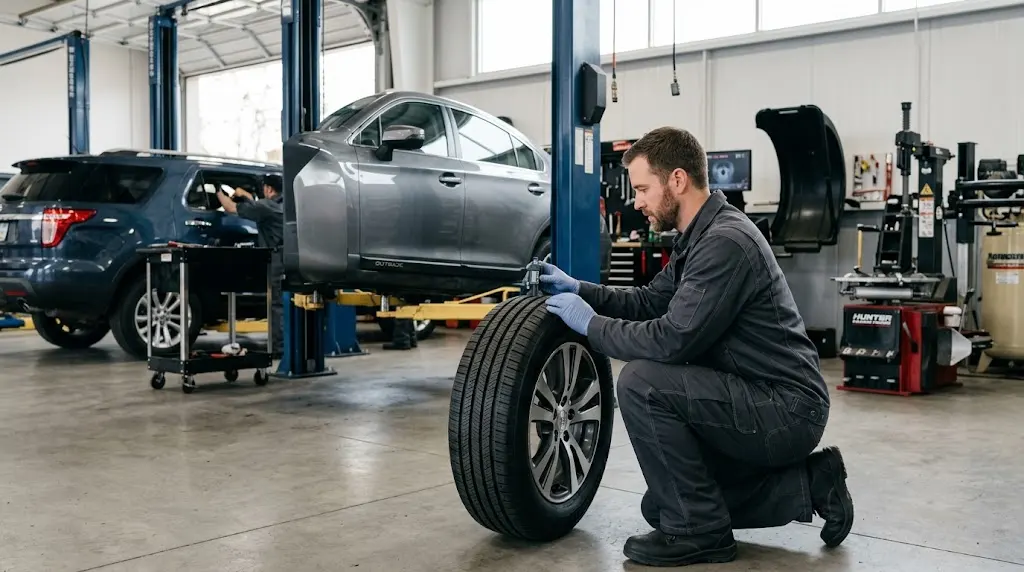
Quick answer: Effective tire care includes maintaining the vehicle manufacturer’s recommended tire pressure, checking tread and sidewalls, monitoring uneven wear, rotating tires when recommended, and addressing balancing or alignment problems when inspection indicates they are needed. NHTSA recommends checking tire pressure and tire condition regularly and before long trips. NHTSA Tire Safety guidance provides detailed consumer information.
What Is Lemoore Tire & Auto Service?
Lemoore Tire & Auto Service is the subject of this automotive guide, with the focus placed on tire safety, maintenance, vehicle care, and practical service decisions.
For anyone researching an automotive provider, it is important to separate general tire-care principles from specific services offered by an individual business. Service availability, pricing, warranties, technician qualifications, appointment requirements, and current operating details should be confirmed directly with the provider.
The broader goal is straightforward: keep tires in suitable condition, identify problems early, and make sure tire-related issues are not hiding a larger mechanical or alignment problem.
Why Tire Maintenance Matters
Tires influence braking, traction, handling, ride quality, fuel economy, and overall vehicle control. NHTSA describes proper tire maintenance as an important part of vehicle safety and recommends regular attention to pressure, tread, damage, rotation, balancing, and alignment. NHTSA TireWise provides current consumer guidance on tire maintenance and safety.
Poor maintenance can contribute to tire failure, including problems associated with underinflation, worn tread, and other forms of tire damage. NHTSA also notes that properly maintained tires can improve tire longevity and fuel efficiency.
That is why tire service should be viewed as part of overall vehicle maintenance rather than an isolated purchase.
What Services Should a Tire and Auto Shop Provide?
The exact services offered by Lemoore Tire & Auto Service should be confirmed directly with the business. However, drivers evaluating a tire and automotive service provider should understand the most important categories of work.
Tire Inspection
A proper inspection should look beyond whether a tire appears inflated. Technicians can check tread condition, uneven wear, visible damage, pressure, and other signs that may indicate a problem.
NHTSA recommends checking tires regularly for cuts, punctures, cracks, bulges, and other damage.
Tire Rotation
Tire rotation can help distribute wear across the tires. However, not every vehicle uses the same rotation pattern, and some vehicles with different front and rear tire sizes may not allow conventional rotation.
Drivers should follow the vehicle manufacturer’s instructions for whether and how frequently tires should be rotated. NHTSA notes that, when recommended by the manufacturer, rotation can help reduce irregular wear and extend tire life.
For another automotive service resource within the RenewWire cluster, see Lowry Auto Service.
Wheel Balancing
Wheel balancing helps ensure that a wheel and tire assembly rotates smoothly. An imbalance can contribute to vibration, particularly at certain speeds.
NHTSA explains that balancing helps prevent shaking and vibration and recommends having new tires balanced when they are installed.
Wheel Alignment
Alignment concerns can appear as uneven tire wear, steering changes, or a vehicle that tends to pull to one side. A proper alignment can help tires wear more evenly and support predictable handling.
Alignment should be evaluated according to symptoms, inspection results, and manufacturer specifications rather than automatically added to every tire visit.
Tire Repair
Not every punctured tire needs immediate replacement, but not every tire can be safely repaired either. The location and characteristics of the damage, the tire’s overall condition, and applicable repair standards all matter.
A qualified tire professional should inspect the tire before determining whether repair or replacement is appropriate.
New Tire Installation
When replacement is necessary, tire size and specifications should match the vehicle manufacturer’s requirements. NHTSA advises consumers to use the correct tire size listed on the vehicle’s Tire and Loading Information Label or in the owner’s manual.
How to Check Tire Pressure Correctly
Tire pressure is one of the easiest maintenance items for drivers to check, but it is also one of the easiest to get wrong.
NHTSA recommends checking tire pressure at least once a month when the tires are cold. The correct pressure should come from the vehicle manufacturer’s tire information label or owner’s manual, not the maximum pressure printed on the tire sidewall.
- Find the manufacturer’s recommended cold tire pressure.
- Check all tires, including the spare if applicable.
- Measure pressure when the tires are cold for the most accurate reading.
- Add or release air as needed to reach the recommended pressure.
- Replace the valve cap and recheck when necessary.
A TPMS warning should also receive attention. A tire pressure monitoring system is useful, but it does not replace regular manual tire checks.
Understanding Tire Tread
Tread provides the gripping surface that helps tires maintain traction on the road. As tread wears, wet-road performance and other aspects of tire performance can change.
NHTSA advises drivers to monitor tread depth and replace tires when tread reaches the applicable minimum. Its consumer guidance identifies 2/32 of an inch as the minimum tread depth at which tires should be replaced.
Drivers should also look for uneven wear. If one section of a tire is wearing faster than another, the cause may involve alignment, balancing, inflation, suspension, or another vehicle condition.
Common Signs Your Tires Need Attention
Some tire problems are obvious, while others develop gradually. Watch for changes in appearance and driving behavior.
- Low tire pressure.
- Frequent loss of air.
- Uneven tread wear.
- Visible cracks or cuts.
- Bulges or sidewall damage.
- Excessive vibration.
- Steering changes.
- Vehicle pulling to one side.
- Unusual tire noise.
- Worn tread indicators.
- Repeated punctures.
- Visible objects embedded in the tread.
NHTSA specifically recommends consulting a tire service professional when tires develop performance problems such as difficulty maintaining pressure, unusual noise, or vibration.
Uneven Tire Wear: What It Can Mean
Uneven tire wear is more than a cosmetic issue. It can provide useful clues about how the vehicle is interacting with the road.
Center Tread Wear
Excessive wear in the center of the tread can be associated with overinflation, although the exact cause should be confirmed through inspection.
Edge Wear
Wear concentrated toward the edges can be associated with underinflation or other vehicle conditions.
One-Sided Wear
Wear concentrated on one side can point toward alignment or suspension-related concerns.
Irregular or Cupped Wear
Irregular wear patterns can involve balancing, suspension, alignment, tire condition, or other factors.
These patterns are clues rather than automatic diagnoses. A qualified technician should inspect the tire and vehicle before a repair decision is made.
Tire Balancing vs. Wheel Alignment
Balancing and alignment are related but different services.
Balancing addresses the distribution of weight around the wheel and tire assembly. An imbalance can contribute to vibration.
Alignment concerns the angles of the wheels relative to the vehicle and road. Alignment problems can contribute to pulling and uneven tire wear.
Understanding this difference helps drivers ask better questions when a shop recommends additional service.
When Should You Replace Tires?
Tire replacement should not be based solely on age or appearance. Tread depth, physical damage, irregular wear, tire age, performance changes, and manufacturer guidance all deserve consideration.
NHTSA notes that tires can age even when they are not driven frequently and that environmental exposure and storage conditions can contribute to aging.
Replacement may be appropriate when tires have insufficient tread, serious damage, severe irregular wear, or other conditions that make continued use unsafe.
Some vehicle and tire manufacturers recommend replacement after a particular age regardless of treadwear, so drivers should consult the relevant manufacturer guidance.
Choosing the Right Replacement Tires
Buying tires is not simply a matter of choosing the cheapest option in the correct general size. Drivers should consider the vehicle, climate, road conditions, driving habits, load requirements, and manufacturer’s specifications.
All-Season Tires
All-season tires are designed to handle a broad range of conditions and may suit drivers who experience varied weather without extreme winter conditions.
Summer Tires
Summer tires are designed for warm-weather performance and are not intended for snow and ice conditions.
Winter Tires
Winter tires are designed to perform better in deep snow and cold winter conditions than conventional all-season tires.
All-Terrain Tires
All-terrain tires are designed to balance on-road driving with some off-road capability and are commonly associated with SUVs and four-wheel-drive vehicles.
NHTSA explains that tire choice should take into account where and how the vehicle is driven.
How Tire Choice Affects Vehicle Performance
The tire is an important part of the vehicle’s overall performance. Tread design, construction, size, traction characteristics, temperature rating, and inflation all influence how the vehicle behaves.
NHTSA’s Uniform Tire Quality Grading information provides consumers with ratings covering treadwear, traction, and temperature performance for applicable passenger vehicle tires.
Drivers should still remember that tire ratings are only one part of the purchasing decision. The correct size, load requirements, vehicle compatibility, climate, and intended use also matter.
Why Tire Maintenance Can Affect Fuel Economy
Tire condition can influence how efficiently a vehicle moves along the road. Underinflated tires can increase rolling resistance, which can negatively affect fuel economy.
NHTSA states that maintaining proper tire inflation can improve fuel economy and extend tire life.
That makes regular tire checks useful not only for safety but also for controlling long-term ownership costs.
Tire Care Before a Long Road Trip
Long trips are an ideal time to inspect tires because a problem that seems minor around town can become more disruptive during extended highway driving.
Before leaving, check:
- Cold tire pressure.
- Tread condition.
- Sidewalls for damage.
- Uneven wear.
- Spare tire condition and pressure.
- Valve caps.
- Visible punctures or embedded objects.
NHTSA specifically recommends checking tire pressure and inspecting tires for damage before long road trips.
Drivers who need broader vehicle maintenance information can also read Tamm Auto Service.
How a Tire Problem Can Point to a Larger Vehicle Issue
A tire does not always cause the problem that appears on its tread. Sometimes the tire is showing evidence of another issue.
For example, repeated uneven wear may justify checking alignment, suspension, steering, or balancing. A tire that repeatedly loses pressure may require inspection for a puncture, valve problem, wheel issue, or other source of air loss.
This is why replacing a tire without investigating recurring symptoms may not solve the underlying problem.
For broader automotive maintenance guidance, see Andy’s Auto Service.
What to Ask Before Buying or Servicing Tires
A few questions can help drivers make a more informed tire-service decision.
- What tire size does my vehicle manufacturer specify?
- What type of tire is appropriate for my driving conditions?
- What is causing the current tire wear?
- Do the wheels need balancing?
- Does the vehicle need an alignment?
- Can the existing tire be safely repaired?
- How old are the replacement tires?
- What warranty applies?
- Does installation include balancing?
- What maintenance should I perform after installation?
These questions can help distinguish a complete tire-care assessment from a simple tire sale.
How to Evaluate a Tire and Auto Service Provider
When comparing Lemoore Tire & Auto Service with another provider, consider the complete service experience.
Equipment
Modern tire work can require specialized mounting, balancing, alignment, and diagnostic equipment. The appropriate equipment depends on the vehicle and service being performed.
Technical Knowledge
Technicians should understand tire specifications and recognize when a tire problem may be connected to another vehicle system.
Communication
A professional service provider should explain what was found and why additional work is recommended.
Documentation
Keep invoices and service records showing tire size, installation, rotation, balancing, alignment, and other relevant work.
Warranty Information
Before purchasing tires or approving significant service, understand what warranty coverage applies to the product and workmanship.
Comparing Lemoore Tire & Auto Service With Other Vehicle-Care Resources
RenewWire’s automotive content cluster includes several related service topics. Readers can use these articles to explore broader vehicle maintenance and compare different aspects of car care.
For general vehicle maintenance, see Lowry Auto Service. For broader repair and maintenance considerations, see Andy’s Auto Service and Tamm Auto Service.
Another related resource is Allstar Auto Services, which adds another perspective to the site’s vehicle-care cluster.
Tire Service for Different Types of Vehicles
Tire requirements can differ substantially between passenger cars, SUVs, trucks, performance vehicles, recreational vehicles, and other platforms.
Vehicle weight, load capacity, drivetrain, tire size, driving environment, and intended use should all be considered before selecting replacement tires.
For example, drivers researching recreational towing can explore the TrailManor 2720 Sport resource, while those researching specialty vehicle use can review CRF450R street-legal considerations and Roxor street-legal considerations.
Vehicle Ownership Costs and Tire Replacement
Tires are a predictable but significant vehicle ownership expense. Drivers can reduce unnecessary costs by maintaining correct pressure, addressing uneven wear early, and choosing tires appropriate for the vehicle and driving conditions.
However, delaying necessary tire replacement simply to save money can create greater safety and ownership risks.
Vehicle financing is another part of the overall ownership budget. Readers can explore vehicle financing options when considering the wider financial side of vehicle ownership.
Insurance is also part of that picture. Related RenewWire resources include insurance coverage guidance and vehicle-owner protection topics.
Common Tire Maintenance Mistakes
Using the Sidewall Maximum Instead of the Vehicle Recommendation
The maximum pressure printed on a tire is not necessarily the correct pressure for the vehicle. Use the manufacturer’s recommended pressure from the vehicle label or owner’s manual.
Checking Pressure Only When the TPMS Light Appears
TPMS is a useful warning system, but NHTSA recommends regular manual tire-pressure checks as well.
Ignoring Uneven Wear
Uneven wear can indicate an underlying alignment, balancing, inflation, suspension, or other problem.
Waiting Until Tread Is Completely Gone
Tires should be replaced before they become dangerously worn. Monitor tread depth and follow applicable manufacturer and safety guidance.
Buying Tires Based Only on Price
The cheapest tire may not be the best fit for the vehicle, climate, load requirements, or driving style.
Frequently Asked Questions About Lemoore Tire & Auto Service
What should I look for in Lemoore Tire & Auto Service?
Look for appropriate tire equipment, qualified technicians, clear inspections, accurate recommendations, transparent pricing, useful service records, and warranty information.
How often should I check my tire pressure?
NHTSA recommends checking tire pressure at least once a month when the tires are cold and before long trips.
What tire pressure should I use?
Use the tire pressure specified by the vehicle manufacturer on the Tire and Loading Information Label or in the owner’s manual. Do not simply use the maximum pressure printed on the tire sidewall.
When should I replace my tires?
Replacement may be necessary when tread is insufficient, tires have serious damage, wear is irregular, or the tires have aged beyond the manufacturer’s recommended service period. NHTSA recommends replacing tires when tread reaches 2/32 of an inch and emphasizes inspecting for physical damage and aging.
What causes uneven tire wear?
Possible causes include incorrect inflation, alignment problems, balancing issues, suspension wear, or other vehicle conditions. A professional inspection is needed to identify the actual cause.
Is tire rotation necessary for every vehicle?
Not necessarily. Follow the vehicle manufacturer’s recommendations because some vehicles have different front and rear tire sizes or other configurations that affect whether rotation is appropriate.
Should new tires be balanced?
NHTSA recommends balancing new tires during installation. Proper balancing helps reduce vibration and supports smooth wheel rotation.
Final Thoughts
Lemoore Tire & Auto Service fits into an important part of vehicle ownership: keeping tires safe, correctly maintained, and suitable for the vehicle and driving conditions.
Regular pressure checks, tread inspections, appropriate rotation, balancing, alignment when needed, and timely replacement can all contribute to better tire performance and safer driving. Just as importantly, recurring tire problems should be investigated instead of repeatedly treating only the visible symptom.
Drivers researching a tire or auto service provider should compare technical expertise, equipment, communication, documentation, warranty terms, and the quality of the inspection—not simply the lowest price.
For additional automotive resources, continue with Lowry Auto Service, Tamm Auto Service, Andy’s Auto Service, and Allstar Auto Services.