




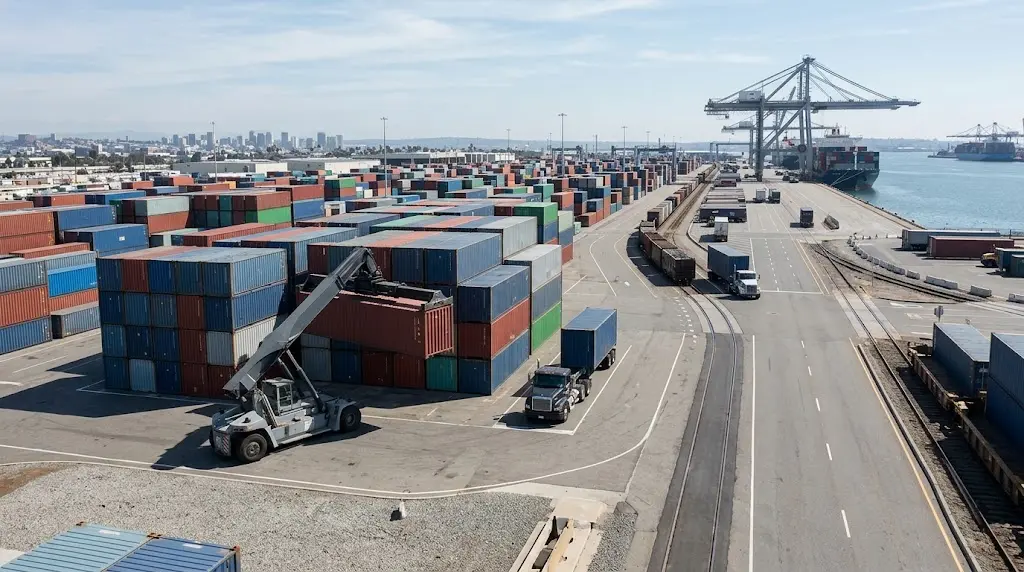
What Is Ray-Mont Logistics?
Ray-Mont Logistics is a logistics company focused on supporting the movement and handling of containerized cargo. Its operations combine terminal-based services with international freight forwarding, allowing customers to coordinate multiple logistics requirements through an integrated model.
The company’s approach is built around three core values: quality, flexibility, and innovation. These principles influence how Ray-Mont approaches cargo handling, customer requirements, technology, and operational improvement.
Its history began with the development of a more efficient transloading model in Montreal. Over time, the company expanded its capabilities and geographic presence across North America.
Businesses researching related logistics models can also explore modern logistics and supply chain efficiency to understand how logistics operations continue to evolve.
How Ray-Mont Logistics Supports the Supply Chain
Supply chain performance depends on how effectively different logistics activities work together. Transportation, storage, loading, packaging, documentation, and freight forwarding can create bottlenecks when they are managed separately.
Ray-Mont’s integrated model is designed to connect these activities. By combining terminal operations with freight forwarding capabilities, the company aims to improve cargo fluidity and reduce friction between different stages of the supply chain.
This approach can be particularly valuable for companies handling bulk commodities, containerized products, agricultural goods, forestry products, industrial materials, and other freight that requires specialized handling.
Key Ray-Mont Logistics Services
1. Transloading and Packaging
Transloading involves transferring cargo between different modes of transportation or handling systems. Efficient transloading can reduce unnecessary handling, improve cargo flow, and help businesses move products into containers according to shipment requirements.
Ray-Mont provides transloading and packaging capabilities for several categories of freight. Its services include bulk-to-bulk, bulk-to-bag, bag-to-bag, and other specialized handling processes.
The company also highlights industry-specific capabilities for agriculture, forestry products, resin, and freight of all kinds. This specialization allows logistics processes to be adapted to the physical characteristics and handling requirements of different cargo.
For a closer look at the role of logistics companies in supply chain operations, see global logistics and supply chain management.
2. Ocean Freight Forwarding
Ocean freight forwarding is another important component of Ray-Mont’s integrated logistics model. Freight forwarding involves coordinating the movement of cargo through carriers, documentation, shipment planning, and other processes required for international transportation.
Ray-Mont states that its freight forwarding operation works with major ocean carriers and provides customers with multiple transportation options based on shipment requirements.
This can help businesses coordinate international shipments while maintaining a single operational relationship across multiple logistics activities.
3. Container Storage
Storage is an important part of supply chain flexibility. Cargo does not always move directly from one transportation stage to the next, and temporary storage can help businesses manage timing differences, changing demand, transportation disruptions, and operational constraints.
Ray-Mont provides container and commodity storage as part of its logistics services. Strategic storage capabilities can help businesses maintain greater flexibility when shipment schedules or supply chain conditions change.
4. Terminal Operations
Terminal operations form a major part of Ray-Mont’s logistics infrastructure. These activities involve receiving, handling, loading, transferring, storing, and preparing cargo for onward transportation.
Efficient terminal operations are especially important when businesses are working with high container volumes. Better space utilization, equipment availability, cargo handling procedures, and coordination can influence how efficiently freight moves through a facility.
Ray-Mont has also invested in specialized equipment and operational processes designed to improve terminal capacity and cargo movement.
Why Integrated Logistics Matters
Traditional logistics structures can involve multiple independent providers. A company may use one organization for terminal handling, another for storage, another for freight forwarding, and additional providers for transportation.
Although this model can work, it may also create communication gaps and additional coordination requirements.
An integrated logistics model attempts to connect multiple activities under a more unified operational structure. Ray-Mont describes this approach as combining terminal operations and international freight forwarding to improve cargo fluidity, efficiency, and service quality.
The potential advantages include:
- Fewer coordination points between logistics activities
- Improved communication between operational teams
- Greater visibility across cargo movements
- More flexible handling of changing shipment requirements
- Better coordination between terminal and freight-forwarding operations
- Potentially smoother movement from origin to final destination
Technology and Logistics Efficiency
Technology has become an increasingly important part of modern logistics. Transportation networks generate large amounts of operational information, and logistics companies need systems that can turn that information into useful visibility and decisions.
Ray-Mont has developed technology-driven systems for freight forwarding and terminal operations and has introduced its Ray-Mont Connected client portal to support interaction with customers.
Technology can help logistics organizations improve areas such as shipment visibility, reporting, communication, documentation, and operational coordination.
The broader relationship between technology and business efficiency is also explored in technology-driven business innovation.
For logistics operators handling significant cargo volumes, digital systems can become particularly valuable because even small improvements in information flow can influence scheduling, equipment utilization, customer communication, and decision-making.
Ray-Mont Logistics and Cargo Visibility
Visibility is one of the most important requirements in modern supply chain management. Businesses need to know where shipments are, what stage they have reached, and whether potential delays could affect downstream operations.
Ray-Mont’s client-facing technology and tracking capabilities are designed to improve access to logistics information. Better visibility can help businesses coordinate inventory, transportation schedules, customer commitments, and internal operations more effectively.
Shipment tracking is particularly important when cargo passes through multiple transportation stages. A centralized view can reduce the need for repeated manual communication between different parties.
Related logistics operations can also be explored through shipment tracking and logistics visibility.
How Ray-Mont Handles Different Types of Cargo
Not every shipment can be handled using the same logistics process. Bulk agricultural commodities, forestry products, resin, steel, granite, and palletized freight can require different equipment, loading methods, storage conditions, and documentation.
Ray-Mont offers specialized transloading and handling capabilities designed around different freight characteristics.
Agricultural Products
Agricultural logistics often involves bulk commodities that must be transferred efficiently while maintaining product integrity. Specialized transloading processes can help move grain and other agricultural products between transportation modes and into export containers.
Forestry Products
Forestry products can require carefully planned loading and transportation processes. Ray-Mont highlights its strategically located terminals and handling capabilities for forest products.
Industrial Resin
Resin logistics requires careful handling and documentation because product integrity and shipment specifications can be important throughout the transportation process.
Freight of All Kinds
Ray-Mont also provides freight-of-all-kinds solutions for cargo such as steel, granite, and palletized materials. This broader capability gives businesses an option for handling different types of freight through an integrated logistics environment.
Ray-Mont Logistics Locations
Ray-Mont Logistics has developed a North American network that includes Canadian operations as well as a U.S. presence.
The company’s publicly listed locations include facilities associated with Montreal, Vancouver, Prince Rupert, and Spokane in Washington, among other operational locations.
A geographically distributed logistics network can help businesses connect production areas, inland transportation networks, terminals, ports, and international markets.
This is especially important for companies involved in cross-border commerce because supply chains frequently depend on several transportation modes and geographic handoffs.
What Makes a Logistics Partner Effective?
Businesses should look beyond transportation rates when evaluating a logistics partner. A logistics provider can have a major influence on operational reliability, customer service, inventory flow, and international trade performance.
Important evaluation criteria include:
- Service coverage: Determine whether the provider can support the geographic and transportation requirements of the business.
- Cargo expertise: Specialized commodities may require equipment and processes that general logistics providers cannot offer.
- Operational flexibility: Supply chain conditions change, so providers should be able to adapt to new requirements.
- Technology: Tracking, reporting, communication, and digital documentation can improve supply chain visibility.
- Storage capabilities: Flexible storage can become valuable when transportation schedules change.
- Freight forwarding experience: International shipments can involve complex documentation, carrier coordination, and timing requirements.
- Quality controls: Cargo integrity and service consistency are essential for long-term logistics performance.
Ray-Mont’s Focus on Quality, Flexibility, and Innovation
Ray-Mont Logistics identifies quality, flexibility, and innovation as core values guiding its operations.
Quality relates to service delivery, information accuracy, and cargo integrity. Flexibility reflects the need to adapt logistics solutions to specific customer requirements. Innovation involves continued development of technology, equipment, and operational processes.
These principles are particularly relevant in an industry where supply chain conditions can change rapidly. Transportation capacity, customer demand, port activity, commodity volumes, and international trade conditions can all affect logistics planning.
Supply Chain Efficiency in a Changing Market
Supply chain efficiency is no longer determined by transportation speed alone. Businesses increasingly need a combination of reliability, visibility, cost control, flexibility, and resilience.
Integrated logistics can contribute to these goals by connecting activities that might otherwise be managed independently.
For example, a company may benefit when terminal handling, storage, packaging, and freight forwarding are coordinated around the same shipment requirements. This can reduce unnecessary handoffs and make it easier to respond when circumstances change.
Companies interested in broader industrial efficiency can also explore modern industrial technologies and operational innovation.
Is Ray-Mont Logistics a Good Fit for Your Business?
Ray-Mont Logistics may be relevant to businesses that require integrated terminal operations, transloading, storage, packaging, and freight forwarding services. Its capabilities are particularly aligned with organizations involved in containerized international trade and commodities that require specialized handling.
However, the right logistics partner depends on the specific requirements of each business. Shipment volume, cargo type, origin and destination, transportation mode, storage requirements, documentation needs, and service expectations should all be evaluated before selecting a provider.
Businesses should also compare service capabilities, geographic coverage, technology, communication processes, and total logistics costs rather than choosing a provider based solely on an individual transportation rate.
Benefits of a More Connected Supply Chain
A connected supply chain can create several operational advantages. When logistics activities communicate effectively, businesses can potentially improve shipment planning and reduce unnecessary delays.
Key benefits can include:
- Better coordination between logistics stages
- Improved shipment visibility
- More flexible cargo handling
- Reduced communication friction
- Improved use of storage and terminal capacity
- More responsive freight planning
- Greater ability to manage changing supply chain conditions
These benefits are not automatic, however. They depend on the quality of the provider’s infrastructure, people, technology, processes, and communication systems.
Final Thoughts on Ray-Mont Logistics
Ray-Mont Logistics represents an integrated approach to modern supply chain management, combining terminal operations, transloading, packaging, storage, and ocean freight forwarding within a connected logistics model.
Its focus on quality, flexibility, innovation, and technology reflects the increasingly complex requirements of international trade. For businesses moving containerized cargo, the ability to coordinate multiple logistics activities can be an important factor in improving supply chain visibility and operational efficiency.
Ultimately, logistics performance depends on selecting services that match the company’s cargo, geography, volume, timing, and operational requirements. Ray-Mont’s integrated capabilities make it a company worth considering for businesses seeking a more connected approach to container logistics and international freight movement.
Frequently Asked Questions
What does Ray-Mont Logistics do?
Ray-Mont Logistics provides integrated logistics services that include transloading, packaging, terminal operations, container storage, and ocean freight forwarding.
Where is Ray-Mont Logistics based?
Ray-Mont Logistics is headquartered in Montreal, Quebec, Canada, and operates across North America.
Does Ray-Mont Logistics provide ocean freight forwarding?
Yes. Ocean freight forwarding is one of Ray-Mont Logistics’ core services, supporting international shipment coordination and carrier relationships.
What types of cargo does Ray-Mont Logistics handle?
Its capabilities include agricultural products, forestry products, resin, steel, granite, palletized freight, and other types of containerized cargo.
Why is integrated logistics important?
Integrated logistics connects multiple supply chain activities, which can improve coordination, cargo flow, visibility, flexibility, and operational efficiency.
Does Ray-Mont Logistics use technology?
Yes. Ray-Mont has developed technology for freight forwarding and terminal operations and provides a client portal designed to improve communication and information flow.