




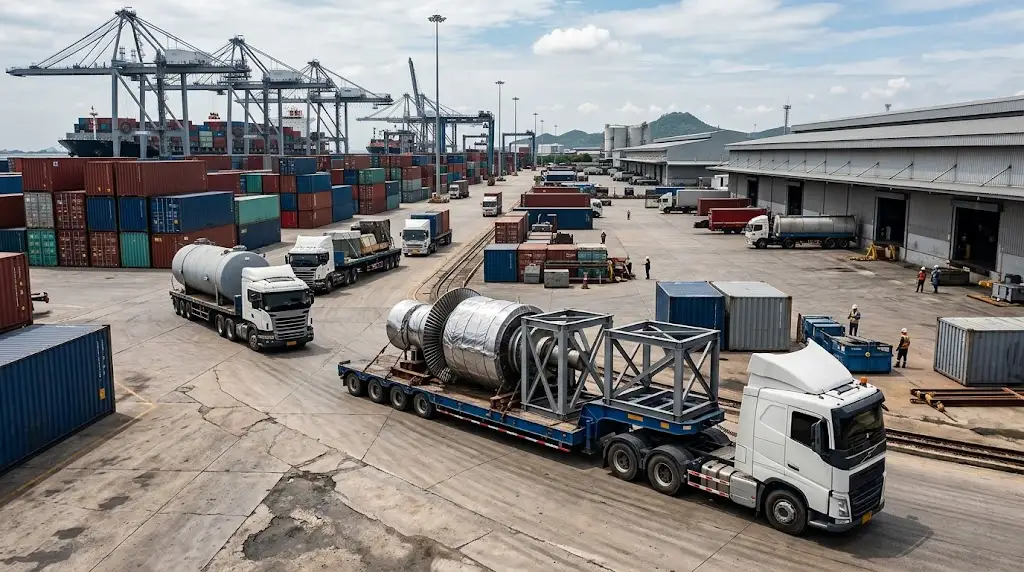
For businesses managing domestic transportation, international trade, heavy machinery, oversized cargo, or project-based freight, understanding how an integrated logistics provider works can help with better supply chain planning. This guide explores LST Logistics, its services, specialized capabilities, and the role of integrated logistics in improving modern supply chain performance.
What Is LST Logistics?
LST Logistics is part of the LST Group of Logistics, a logistics organization based in Chonburi, Thailand. The group brings together LST Logistics Services Co., Ltd., Lucky Warehouse Co., Ltd., and Laemchabang Shipping and Transport Service Co., Ltd. to provide a broader range of logistics services.
The company describes its model as an end-to-end logistics solution rather than transportation alone. Its capabilities include transportation, warehousing, customs clearance, and specialized project logistics.
This integrated structure can be particularly useful for companies whose shipments require several logistics stages. Instead of treating transportation, storage, and customs processes as completely separate activities, an integrated provider can coordinate them as part of a broader supply chain workflow.
Businesses interested in another perspective on integrated supply chain operations can also explore Ray-Mont Logistics and integrated supply chain efficiency.
The History Behind LST Logistics
LST Group’s roots go back to 1990, when Laemchabang Shipping and Transport Service Co., Ltd. was established. According to the company’s history, its early operations focused strongly on customs expertise and support for import and export processes.
In 1996, LST Logistics Services Co., Ltd. expanded the group’s transportation capabilities. The company grew from a small fleet into a transportation operation capable of handling specialized cargo such as gas pipelines, steel billets, and heavy machinery.
Another important development came in 2006 with the addition of Lucky Warehouse Co., Ltd. This expanded the group’s ability to provide storage alongside transportation and customs services.
The result is a logistics structure built around several connected services rather than a single transportation function.
Why Integrated Logistics Matters
Supply chains often involve many individual steps. Cargo may need to be collected, transported, temporarily stored, cleared through customs, transferred between facilities, and delivered to its final destination.
When every step is handled independently, businesses may need to coordinate multiple providers, schedules, documents, and communication channels.
Integrated logistics attempts to reduce this complexity by connecting multiple logistics activities within a coordinated service model.
Potential advantages include:
- Better coordination between transportation and warehousing
- Smoother customs and import-export processes
- Improved shipment planning
- Greater visibility across logistics stages
- More efficient handling of specialized cargo
- Reduced communication friction between service providers
- Greater flexibility for complex projects
The broader role of logistics integration in modern supply chains is also illustrated by global logistics and supply chain operations.
Core LST Logistics Services
Transportation
Transportation is one of LST Group’s central capabilities. The company’s transportation operation has developed experience handling general cargo as well as specialized and heavy freight.
For businesses, transportation efficiency involves more than moving goods from point A to point B. Cargo type, dimensions, weight, route requirements, timing, equipment, and safety considerations can all influence the appropriate transportation strategy.
LST’s experience with specialized cargo allows transportation plans to be adapted to the characteristics of individual shipments.
Warehousing
Warehousing provides businesses with a controlled location for storing goods between different stages of the supply chain.
LST Group provides warehouse services through Lucky Warehouse Co., Ltd. Its integrated approach connects storage with transportation and other logistics activities.
This can be valuable when shipments cannot move directly from arrival to final delivery. Temporary storage may be required because of production schedules, customer demand, customs procedures, transportation availability, or project timing.
Effective warehousing can therefore provide businesses with additional supply chain flexibility.
Customs Clearance
Customs clearance can be one of the more complex components of international logistics. Incorrect documentation, incomplete information, or misunderstandings about regulatory requirements can cause delays and additional costs.
LST Group’s history includes a strong focus on customs expertise. Its original company was established with an emphasis on customs-related services and import-export support.
Having customs knowledge integrated with transportation and warehousing can help businesses coordinate these activities more efficiently.
Specialized Cargo Logistics
Not every shipment can be handled through standard freight procedures. Oversized structures, heavy machinery, long materials, industrial equipment, and project cargo often require specialized planning.
LST Group highlights its ability to handle specialized heavy machinery, large structures, and project-based transportation.
This specialization is important because unusual cargo can introduce challenges involving equipment selection, route planning, loading procedures, permits, safety requirements, and delivery coordination.
Heavy and Oversized Freight
Heavy and oversized shipments require careful planning before transportation begins. Dimensions and weight can influence the equipment required, route selection, loading method, and delivery schedule.
LST Group’s project portfolio includes oversized and heavy-lift transportation projects, demonstrating its focus on specialized logistics operations.
Industrial Materials
Industrial projects frequently involve materials that cannot be treated like ordinary parcel or truckload shipments. Steel products, gas pipelines, railway materials, machinery, and other industrial freight may require specialized vehicles and carefully coordinated delivery schedules.
LST Group’s published project examples include gas pipelines, crane rails, railway steel, wire rods, and other industrial cargo.
LST Logistics and Project Cargo
Project cargo logistics requires a different level of planning from routine freight transportation. Large or unusual shipments can involve multiple pieces of equipment, specialized trailers, route considerations, warehouse coordination, and delivery sequencing.
LST Group’s project portfolio includes oversized cargo transportation from Laem Chabang Port to industrial destinations, heavy-lift transportation planning, crane rail transportation, railway projects, and industrial material logistics.
These projects demonstrate why specialized logistics providers need more than vehicles. They require operational planning, equipment knowledge, communication, safety procedures, and coordination between multiple stages of the shipment.
Laem Chabang Port and LST Logistics
LST Group is strategically positioned in Chonburi, within close proximity to Laem Chabang Port and several industrial and manufacturing areas. The company states that this location places it at the center of an important part of Thailand’s logistics network.
Proximity to a major port can be valuable for businesses involved in international trade because port-related logistics frequently connect ocean transportation with inland transportation, warehousing, customs processes, and final delivery.
For companies moving industrial or project cargo through Thailand, geographic positioning can therefore become an important factor when evaluating logistics providers.
How Warehousing Supports Supply Chain Efficiency
Warehousing is not simply a place to keep products. In a modern supply chain, storage can act as a strategic buffer between supply and demand.
Businesses may need warehouse capacity when production volumes fluctuate, shipments arrive before customers are ready, customs processes take time, or transportation schedules change.
An integrated logistics provider can coordinate warehouse operations with transportation planning, allowing goods to move between storage and delivery according to operational requirements.
For companies with complex supply chains, this flexibility can help prevent transportation schedules from becoming the only factor controlling inventory movement.
The Importance of Customs Clearance
International supply chains depend on accurate customs processes. Goods entering or leaving a country must meet applicable documentation and regulatory requirements.
When customs clearance is disconnected from transportation planning, delays at one stage can affect the entire shipment.
LST Group’s long-standing customs background is therefore an important part of its integrated logistics model. The company specifically describes customs clearance as one of its core services.
For importers and exporters, combining customs support with transportation and warehousing can simplify the coordination required to move goods through international supply chains.
Safety and Reliability in Logistics Operations
Safety is particularly important when logistics operations involve heavy, oversized, or specialized cargo.
Specialized transportation may require appropriate vehicles, equipment, route planning, loading procedures, and trained personnel. A small planning error can create significant operational or safety consequences.
LST Group states that its mission emphasizes safety, innovation, and client satisfaction. The company also highlights trained personnel and modern equipment as important parts of its logistics capabilities.
Businesses evaluating a logistics provider should therefore consider safety practices alongside pricing, delivery speed, and geographic coverage.
LST Logistics and Modern Supply Chain Efficiency
Supply chain efficiency is influenced by how well different logistics functions work together.
A shipment may begin with customs documentation, move through a warehouse, require specialized transportation, and finally reach an industrial project site. If these stages are managed independently, coordination can become complicated.
LST’s one-stop logistics model is designed to connect transportation, warehousing, and customs clearance. This approach can make it easier to coordinate complex movements and reduce the number of separate logistics relationships a business must manage.
For companies with specialized freight requirements, the ability to combine standard logistics services with project cargo capabilities can provide additional flexibility.
Businesses looking at other examples of supply chain optimization can also explore logistics operations focused on precision and speed.
Technology and Innovation in Logistics
Modern logistics increasingly depends on technology to improve visibility, planning, documentation, communication, and operational efficiency.
Technology can support logistics teams by helping them coordinate shipments, track operational information, manage documents, and communicate changes more efficiently.
For a logistics provider handling specialized projects, technology can also support planning and coordination across different locations and transportation stages.
LST Group identifies innovation as part of its mission and positions modern equipment and specialized tools as important elements of its service approach.
The wider relationship between technology and operational improvement can also be explored through technology and future-ready business operations.
LST Logistics for Industrial Supply Chains
Industrial supply chains often have requirements that differ significantly from ordinary consumer logistics.
Manufacturing plants, infrastructure projects, construction operations, and energy-related projects may need large quantities of materials delivered according to specific project schedules.
A delay in one shipment can potentially affect several downstream activities. This makes planning, equipment selection, communication, and delivery reliability particularly important.
LST Group’s published project examples involving gas pipelines, railway materials, crane rails, wire rods, and oversized cargo show the relevance of specialized logistics to industrial supply chains.
What Businesses Should Look for in a Logistics Provider
Selecting a logistics partner requires more than comparing transportation prices. Businesses should evaluate the provider’s capabilities against the actual complexity of their supply chain.
Service Coverage
First, determine whether the provider can handle all required logistics functions, including transportation, warehousing, customs clearance, and specialized cargo services.
Specialized Equipment
Heavy or oversized shipments may require equipment that ordinary logistics providers do not have. Equipment availability should therefore be evaluated before a project begins.
Industry Experience
Experience with similar cargo and projects can reduce operational uncertainty. A provider familiar with industrial or project logistics may understand challenges that general freight providers encounter less frequently.
Location
Geographic positioning can influence transportation costs, transit times, and access to ports or industrial zones. LST’s Chonburi location near Laem Chabang Port is one example of how logistics infrastructure can influence service capabilities.
Customs Expertise
Businesses involved in international trade should assess whether a logistics partner can support customs processes as part of the overall shipment workflow.
Communication
Clear communication becomes especially important when a shipment involves several logistics stages. Businesses should understand how status updates, schedule changes, documentation, and operational issues will be communicated.
Advantages of an End-to-End Logistics Model
An end-to-end logistics approach can offer several potential benefits for businesses managing complex supply chains.
- One coordinated logistics relationship
- Integrated transportation and warehousing
- Customs support alongside logistics operations
- Specialized cargo handling capabilities
- Better coordination for project shipments
- Greater operational flexibility
- Potentially fewer communication gaps
These advantages depend on the provider’s actual infrastructure, expertise, processes, and ability to coordinate services effectively.
Why LST Logistics Stands Out in Specialized Freight
LST Group’s positioning is built around more than conventional transportation. Its service structure combines transportation, warehousing, customs clearance, and specialized project logistics.
Its history since 1990, expansion into transportation and warehousing, and experience with specialized industrial projects provide a foundation for handling complex logistics requirements.
The company’s project portfolio further demonstrates its focus on specialized freight, including oversized cargo, heavy-lift operations, gas pipelines, railway materials, crane rails, and wire rods.
For businesses whose logistics requirements extend beyond standard freight transportation, this broader capability can be an important consideration.
Final Thoughts on LST Logistics
LST Logistics represents an integrated approach to supply chain management, combining transportation, warehousing, customs clearance, and specialized project logistics.
With roots dating back to 1990 and operations based in Chonburi near Laem Chabang Port and major industrial areas, LST Group has developed its capabilities around the needs of modern businesses and complex freight movements.
Its experience with oversized cargo, heavy machinery, industrial materials, railway projects, gas pipelines, and other specialized shipments demonstrates the importance of planning and coordination in modern logistics.
Ultimately, supply chain efficiency depends on choosing logistics services that match the cargo, geography, project requirements, timing, and regulatory environment. For companies seeking a more connected logistics model in Thailand, LST Logistics offers a broad combination of transportation, warehousing, customs, and specialized cargo capabilities.
Frequently Asked Questions
What is LST Logistics?
LST Logistics is part of LST Group of Logistics, a Chonburi-based Thai logistics organization providing transportation, warehousing, customs clearance, and specialized logistics services.
When was LST Group established?
LST Group traces its beginnings to 1990, when Laemchabang Shipping and Transport Service Co., Ltd. was established.
What services does LST Logistics provide?
The group provides transportation, warehousing, customs clearance, specialized cargo handling, heavy and oversized transportation, and project logistics services.
Where is LST Logistics located?
LST Group is based in Chonburi, Thailand, in an area strategically positioned near Laem Chabang Port, industrial parks, manufacturing hubs, and container yards.
Does LST Logistics handle oversized cargo?
Yes. LST Group publishes several project examples involving oversized and heavy cargo, including heavy-lift transportation and long industrial materials.
Does LST Logistics offer customs clearance?
Yes. Customs clearance is one of the group’s core logistics services and has been part of its history since its early operations.
Why is integrated logistics important?
Integrated logistics connects transportation, warehousing, customs, and other supply chain activities, potentially improving coordination and reducing operational complexity.