




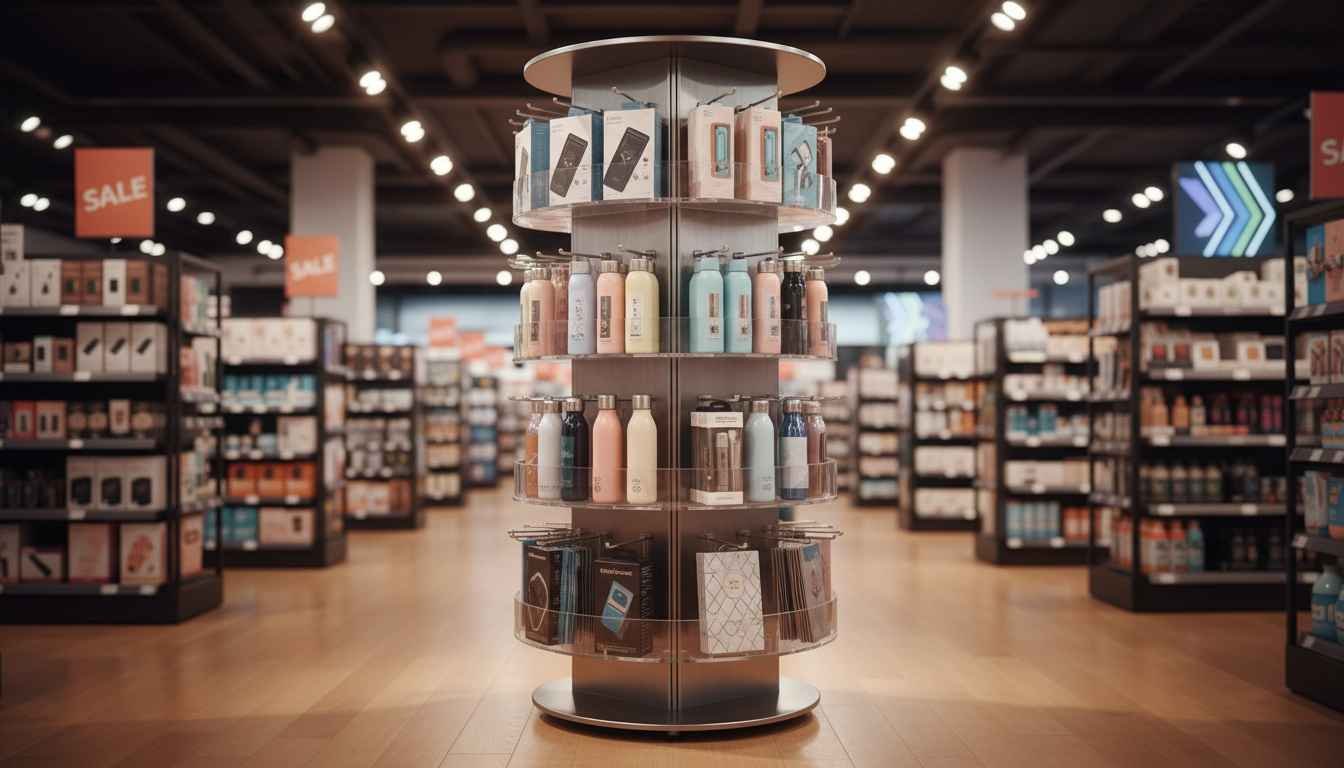
The clock is ticking. You’ve got a limited amount of floor space, and the question looms: are retail display spinners really the secret weapon to boost impulse sales, or just a gimmick that spins money down the drain?
Question 1: Do customers actually engage with spinners?
It sounds logical – people love to spin things – but engagement isn’t guaranteed. Studies show that while novelty can attract attention, it often fades quickly. If your product doesn’t grab interest within the first glance, the spinner might end up being ignored.
Question 2: Will a spinner increase my sales?
Maybe. It’s tempting to believe that motion automatically equates to purchase, but the reality is more nuanced. High-traffic areas improve the odds, but placement, product appeal, and pricing play a far bigger role. A flashy spinner without a compelling product could simply become eye candy.
In the competitive landscape of retail, every inch of shelf space counts, and retailers are constantly on the lookout for innovative ways to maximize product visibility and sales. One popular solution that has garnered attention is the use of retail display spinners, which promise to enhance product presentation and attract customers’ eyes. However, the question remains: are these spinners truly worth the investment? As we delve into this topic, we will explore the benefits and drawbacks of incorporating retail display spinners into your merchandising strategy, evaluating their impact on customer engagement and sales performance to help you make an informed decision about their role in your retail environment.
Question 3: Are retail display spinners cost-effective?
Here’s where skepticism pays off. The initial investment might be low, but consider durability, maintenance, and the limited space it occupies. Many retailers discover that spinners need frequent restocking and repositioning to remain effective, which can erode any perceived cost benefit. For niche or hard-to-find products, though, the visual hook could justify the cost. Check out NGK.com for examples of products that pair well with spinner displays.
Potential Drawbacks: Who Should Avoid This?
Retailers with tight budgets, low foot traffic, or products that rely on detailed descriptions should think twice. Spinners are visually engaging but rarely replace informative signage. Also, if your customer base prefers browsing at a slower pace, the motion might feel gimmicky and even deter sales.
Question 4: Is there a risk-free way to test this?
Yes. Start small. Use a single spinner for a high-margin or impulse item and track its performance. Many suppliers offer money-back or trial options for first-time buyers, allowing you to measure ROI without committing to a large batch.
Question 5: Are they right for every product?
Absolutely not. Consumables, small gadgets, or collectibles often benefit the most. Bulkier or luxury items generally don’t, because the tactile interaction with the product itself is more critical than the novelty of spinning it.
Related Reading:
- Top 10 Impulse Buy Products for Retail Displays
- How Visual Merchandising Impacts Shopper Psychology
- Maximizing Small Retail Spaces Efficiently
- The ROI of Novelty Displays: Facts vs. Fiction