




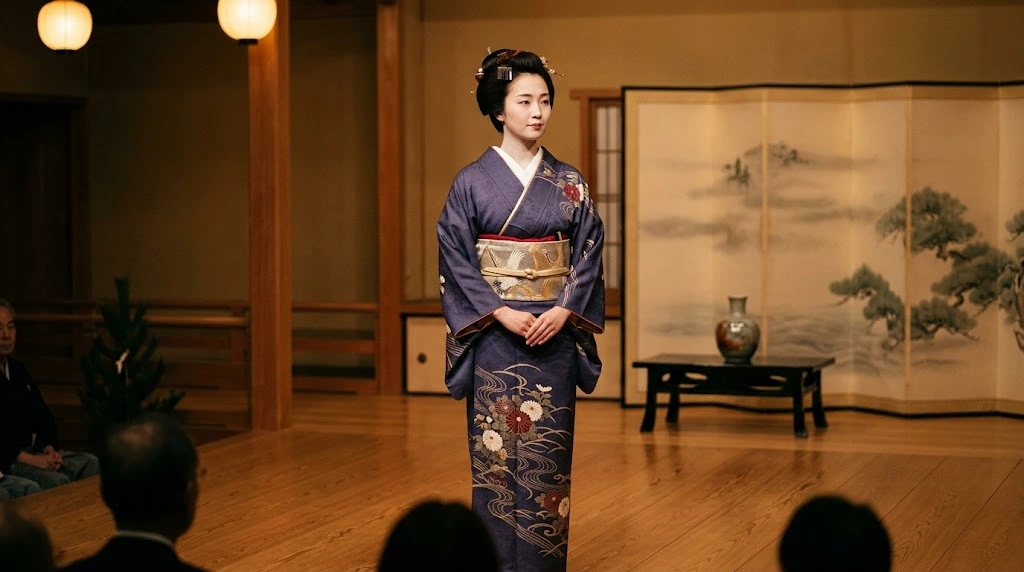
What Is a Kimono-Clad Entertainer?
A kimono-clad entertainer is a performer who wears a kimono as part of a stage presentation, cultural demonstration, theatrical production, or other entertainment setting. The term describes an appearance rather than one specific profession or performance style.
Depending on the production, the performer might be a musician, dancer, actor, host, storyteller, or cultural presenter. The kimono may be central to the performance, support a character, or contribute to the visual atmosphere of an event.
It is important to distinguish between wearing a kimono for aesthetic purposes and participating in an established traditional art form. Each performance has its own requirements, and appropriate clothing, movement, and presentation depend on the context.
Understanding the Cultural Significance of the Kimono
The kimono is a traditional Japanese garment with a long history and a wide range of forms, fabrics, patterns, and methods of styling. Its appearance can vary according to the occasion, the wearer’s preferences, the garment’s construction, and the conventions associated with particular settings.
Kimono design is not limited to a single color palette or decorative style. Floral motifs, geometric patterns, seasonal references, woven textures, and dyed designs can all contribute to the visual character of a garment.
For performers, understanding this background can help ensure that costume choices are thoughtful rather than purely decorative. Cultural research, guidance from knowledgeable practitioners, and attention to the occasion can make a presentation more informed and respectful.
How Traditional Kimono Styling Shapes Stage Presence
Stage presence involves more than appearance. Posture, timing, facial expression, movement, confidence, and audience awareness all influence how a performance is received. A kimono introduces particular visual lines and layers that performers need to consider when preparing their movements.
Posture and Movement
A performer should practice moving comfortably in the selected garment before appearing on stage. Depending on the kimono, obi, footwear, and performance style, certain movements may require adjustment.
Rehearsal helps performers understand how sleeves, hems, and fabric layers respond to movement. It also allows the production team to identify practical concerns before the performance begins.
Visual Composition
Traditional garments can create a distinctive silhouette under stage lighting. Costume colors, fabric textures, and patterns should work with the set design rather than compete with it.
For photography and video, lighting should reveal the garment’s details without washing out its colors or creating distracting shadows. A balanced visual composition can help audiences appreciate the craftsmanship of the clothing and the performer’s expression.
Choosing a Kimono for a Performance
The appropriate garment depends on the purpose of the appearance. A formal theatrical production, a cultural demonstration, a musical performance, and a contemporary fashion presentation may require different styling decisions.
- Performance context: Consider the venue, audience, artistic purpose, and any established dress conventions.
- Fabric and comfort: Choose materials suitable for the duration of the performance and the conditions of the venue.
- Color and pattern: Select designs that complement the stage environment and the intended visual mood.
- Fit and construction: Ensure the garment is arranged securely and allows the movements required for the performance.
- Accessories: Use appropriate footwear, obi styling, and other accessories based on the garment and context.
- Care and handling: Follow suitable garment-care practices to protect delicate fabrics and decorative details.
For performers who are unfamiliar with traditional kimono dressing, guidance from an experienced dresser or knowledgeable practitioner can be particularly valuable.
Combining Traditional Aesthetics with Modern Entertainment
Contemporary entertainment often brings together different visual influences, musical styles, production techniques, and storytelling methods. Traditional clothing can be incorporated into modern productions when the creative choices are intentional and well researched.
Theater and Storytelling
In theater, costume helps establish a character’s identity, historical setting, and relationship to the story. A kimono may be appropriate when the production’s context supports its use and the design has been developed with cultural and historical considerations in mind.
Music and Dance
Performers may incorporate traditional garments into musical or dance presentations. The costume must be suitable for the movement involved, and the choreography should account for the garment’s construction.
Photography and Video
Editorial photography and filmed performances can use kimono styling to create visual narratives around craftsmanship, tradition, fashion, or performance. Thoughtful lighting and composition can emphasize the garment without reducing its cultural meaning to decoration.
For additional visual-production ideas, explore these fashion photography tips and this guide to product and lifestyle photography.
Respectful Cultural Presentation
When presenting Japanese clothing and artistic traditions to a broad audience, context matters. A respectful performance avoids treating Japanese culture as a collection of interchangeable visual symbols.
Performers and production teams can take several practical steps to improve cultural understanding:
- Research the garment and the context in which it is being used.
- Consult knowledgeable practitioners when a performance references a specific tradition.
- Avoid presenting invented customs or unsupported historical claims as established facts.
- Credit cultural practitioners and collaborators when appropriate.
- Use costumes and accessories in ways that suit the performance’s purpose.
- Explain the cultural context when it would help the audience understand the presentation.
Cultural respect does not prevent creative interpretation. Instead, research and collaboration help performers make stronger artistic choices while avoiding misleading representations.
Preparing for a Kimono-Clad Stage Performance
Good preparation helps the performer focus on the audience rather than wardrobe concerns. A practical rehearsal plan should cover both the artistic and technical aspects of the appearance.
Rehearse in the Actual Outfit
Whenever possible, rehearse in the garment or a representative version of it. Practice entrances, exits, turns, seated positions, and any movements required by the production.
Check Stage Lighting
Test the costume under the venue’s lighting conditions. Some fabrics reflect light differently from others, and certain patterns may appear more prominent on camera than they do in person.
Coordinate with the Production Team
Discuss costume changes, stage transitions, microphones, props, and backstage arrangements in advance. These details are especially important when a performer must move quickly between scenes or appearances.
Plan for Garment Care
Use appropriate storage and handling methods before and after the performance. Delicate garments may require specialist cleaning or maintenance, so care instructions should be established before the event.
Developing Confidence and Professional Stage Presence
Confidence grows through preparation, repetition, and constructive feedback. Performers should work on voice projection, timing, audience engagement, and the ability to remain composed when unexpected situations arise.
Feedback from directors, costume specialists, fellow performers, and other qualified professionals can help identify improvements. A useful rehearsal process focuses on specific observations rather than vague judgments.
Personal development can also support performance preparation. Explore practical ways to improve your mindset and ideas for developing personal style for additional perspectives on confidence and presentation.
Modern Fashion and Traditional Inspiration
Traditional garments can inspire contemporary fashion through their silhouettes, construction techniques, textile patterns, and attention to detail. Designers may explore these influences in modern clothing, stage costumes, and editorial concepts.
However, contemporary interpretation should not imply that every kimono-inspired design is a traditional kimono. Clear descriptions help audiences distinguish historical garments from modern adaptations.
Readers interested in the evolution of contemporary clothing can also explore RenewWire’s guide to streetwear trends and fashion evolution and its overview of formal event fashion.
Frequently Asked Questions
What does kimono-clad entertainer mean?
It describes an entertainer who wears a kimono as part of a performance, presentation, theatrical role, or other creative appearance. The term does not identify one specific occupation.
Can a kimono be worn in modern entertainment?
Yes. A kimono can appear in theater, music, cultural presentations, photography, and other productions. The garment should be selected and presented with attention to the performance context and cultural significance.
What should performers consider when wearing a kimono on stage?
Important considerations include comfort, fit, movement, accessories, lighting, garment care, and the requirements of the performance.
How can performers present Japanese clothing respectfully?
Research the garment, consult knowledgeable practitioners when appropriate, avoid unsupported cultural claims, and explain relevant context when it benefits the audience.
Does wearing a kimono automatically make a performance traditional?
No. The garment is only one element of a performance. The artistic form, movement, music, storytelling, and cultural context all influence whether a presentation represents a particular tradition.
Conclusion
A kimono-clad entertainer can create a memorable stage presence by bringing together thoughtful costume selection, performance skills, visual presentation, and cultural awareness. Traditional clothing can contribute depth and elegance to modern entertainment when it is used with care and a clear artistic purpose.
For performers and production teams, the strongest approach combines preparation with curiosity. Understanding the garment, rehearsing in it, coordinating with the production team, and respecting the cultural context can help create a polished and meaningful presentation.