




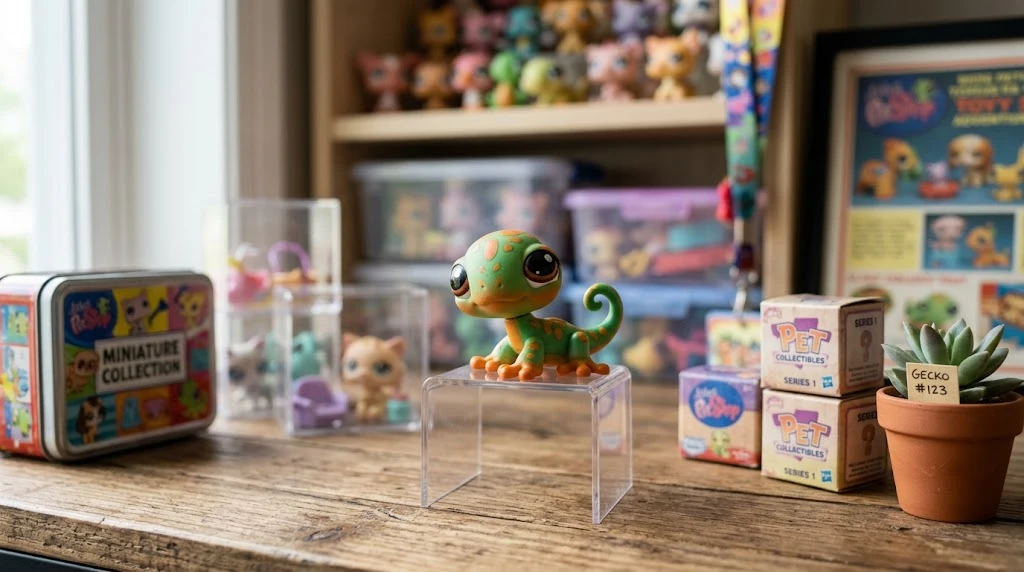
The Littlest Pet Shop Gecko has become an interesting part of the wider LPS collecting community. With different gecko figures appearing across multiple generations, sets, playsets, and special releases, collectors can find considerable variety in colors, molds, accessories, and packaging.
For someone new to Littlest Pet Shop collecting, identifying a gecko can sometimes be challenging. Two figures may look similar while belonging to different generations or releases. Others may have different numbers, accessories, colors, or packaging that help distinguish them.
This guide explains how to identify, organize, display, and preserve Littlest Pet Shop geckos while providing useful context for collectors who are building an LPS collection.
What Is a Littlest Pet Shop Gecko?
A Littlest Pet Shop gecko is one of the miniature reptile figures released as part of the Littlest Pet Shop toy line. LPS has included geckos across multiple generations, with documented examples ranging from early releases to later collections.
The official Littlest Pet Shop brand describes LPS as a collectible pet line that began in 1992, returned strongly in the early 2000s, and continues today with newer generations of collectible pets.
Collectors can therefore encounter geckos from very different periods. Identifying the generation and specific pet number is an important first step when cataloging a collection.
Why Are LPS Geckos Popular With Collectors?
Geckos have several characteristics that make them visually distinctive within an LPS collection. Their reptile-inspired shapes, unusual colors, patterned bodies, and different molds provide variety compared with more commonly collected cat, dog, or rabbit figures.
Collectors may focus on geckos because they enjoy:
- Collecting reptile-themed LPS figures
- Completing specific generations
- Finding uncommon colors or variants
- Collecting figures by pet number
- Completing playsets and multipacks
- Displaying themed LPS collections
The collecting experience can also connect with broader interests in sports and collectible memorabilia, where identification, condition, rarity, and presentation are similarly important.
Littlest Pet Shop Gecko Generations
One of the easiest ways to understand LPS geckos is by generation. Different generations introduced different molds, designs, proportions, and collecting styles.
Generation 1 Geckos
Generation 1 includes some of the earliest Littlest Pet Shop geckos. Documented examples include Gecko #111, which appeared in Get Better Center playsets, as well as Gecko #326 and Gecko #441.
These older figures can be especially interesting to collectors who enjoy the history of the brand and earlier LPS designs.
Generation 2 Geckos
Generation 2 includes several recognizable gecko releases. The documented list includes #492, #530, #596, #751, #847, and #947. Several were associated with playsets or multipacks, with some releases tied to specific retailers.
Generation 2 is particularly important to many LPS collectors because of the classic bobble-head style associated with this era.
Generation 3 Geckos
Generation 3 includes geckos such as #1154, #1215, #1261, #1365, #1455, #1667, #2212, #2289, and #2601. Some appeared in collector packs, playsets, singles, or blind-bag releases.
These releases demonstrate how varied the LPS collecting system became as new sets and packaging formats were introduced.
Generation 4 Geckos
Generation 4 includes several figures using gecko molds associated with characters such as Vinnie Terrio. Documented releases include #2696, #3057, #3277, #3558, #3624, and #3630.
Generation 6 Geckos
Later LPS releases also included geckos in special collections, tubes, multipacks, and other formats. A collector database currently documents multiple Generation 6 gecko releases, including figures such as Skip Slatescales, Ally Geckoro, Mabbox Hilizzard, Gary Geckov, and other gecko figures.
How to Identify a Littlest Pet Shop Gecko
Identifying an LPS gecko is easier when you use several characteristics instead of relying only on appearance.
Check the Pet Number
Pet numbers are one of the most useful identification tools. Numbers such as #111, #326, #492, #1154, and #1365 can help distinguish individual releases.
If your gecko has a visible number or you have the original packaging, record that information before trying to determine its value.
Compare the Mold
The physical mold can also help identify a figure. Head shape, body proportions, eyes, legs, tail, and surface texture may distinguish one gecko from another.
Look at Colors and Markings
Color patterns can provide another clue. Some figures have spots, stripes, airbrushed markings, decals, or unusual eye colors.
For example, documented Gecko #326 has an orange body with darker spots and olive-green eyes, while Gecko #492 is described with turquoise and green coloration, orange flower decals, and lime-green eyes.
Check Accessories
Accessories can be especially useful when identifying an LPS gecko that originally came in a playset or multipack. Jackets, scenery pieces, containers, accessories, and packaging can help connect a figure to its original release.
Popular Littlest Pet Shop Gecko Examples
Several geckos stand out because they are connected to identifiable sets or interesting release formats.
Gecko #111
Gecko #111 is an early figure associated with the Get Better Center playset. Documentation records multiple releases of this gecko in 2006, including standard and larger playset configurations.
Gecko #326
Gecko #326 was released in 2007 as part of a Pet Pairs set and is notable for its Real Feel texture. Its head and back have a textured appearance intended to give the figure a more tactile reptile-like quality.
Gecko #492
Gecko #492 is associated with the Get Better Center V2 playset. Its distinctive turquoise and green coloring and decorative flower markings make it easy to distinguish from some other geckos.
Gecko #1365
Gecko #1365 appeared in a Generation 3 Collector’s Pack alongside other animal figures.
What Makes an LPS Gecko Valuable?
Not every Littlest Pet Shop gecko has the same market value. Collectors generally consider several factors when assessing a figure.
- Specific pet number
- Generation
- Rarity and availability
- Original packaging
- Accessories
- Condition
- Paint quality
- Authenticity
- Demand among collectors
A figure connected to an uncommon release may attract more interest than a commonly available figure. However, asking prices should not automatically be treated as confirmed market value.
How Condition Affects LPS Gecko Collecting
Condition is important because these figures were designed as toys and many were handled extensively. Paint wear, scratches, fading, dirt, damaged accessories, loose parts, and other signs of use can affect a figure’s condition.
Collectors should examine the head, eyes, body, ears, legs, tail, neck peg, and painted details carefully.
When photographing condition, techniques from product photography can help capture small details more clearly.
Authentic vs. Fake Littlest Pet Shop Geckos
Authenticity is an important consideration for collectors, especially when purchasing older or highly sought-after LPS figures.
Collectors can compare several characteristics:
- Body shape
- Head shape
- Eye printing
- Paint placement
- Plastic quality
- Neck and peg construction
- Pet number markings
- Overall proportions
A single characteristic should not always be used as the only authenticity test. Comparing the figure against multiple documented examples is a more reliable approach.
How to Clean a Littlest Pet Shop Gecko
Cleaning should be approached carefully because painted details can be damaged by aggressive methods.
For ordinary surface dust, start with a soft, dry cloth or gentle brush. If additional cleaning is necessary, use minimal moisture and avoid harsh chemicals, abrasive materials, and strong solvents.
Never assume that a household cleaner is safe for painted collectible plastic. A cleaning method that works on ordinary toys may damage an older LPS figure.
How to Store LPS Geckos
Proper storage helps protect figures from dust, sunlight, excessive heat, moisture, and accidental damage.
Individual figures can be stored in clean containers with enough space to prevent unnecessary rubbing or pressure. Avoid overcrowding a box because accessories and painted surfaces can scrape against one another.
If the figure has removable accessories, storing them separately can make organization easier.
How to Display a Littlest Pet Shop Gecko Collection
Displaying LPS figures can turn a collection into a colorful decorative feature. Clear shelves, small display cases, acrylic risers, and themed backgrounds can work well.
Try grouping figures according to generation, animal type, color, or pet number. A dedicated reptile section can make a gecko collection particularly easy to explore.
Collectors interested in presentation can also explore display and merchandising ideas when planning shelves or collectible arrangements.
How to Organize a Littlest Pet Shop Collection
A large LPS collection can become difficult to manage without a consistent system. A simple spreadsheet or catalog can make identification much easier.
Useful information to record includes:
- Pet number
- Animal type
- Generation
- Original set or playset
- Accessories
- Condition
- Purchase date
- Purchase price
- Estimated current value
- Photographs
Collectors who also enjoy other memorabilia can apply the same organization principles to sports-card collections and other collectible categories.
Littlest Pet Shop Gecko Accessories
Accessories can add context to a figure and sometimes help identify the set from which it originated.
Depending on the release, an LPS gecko may have originally appeared with clothing, scenery, playset equipment, containers, or other miniature accessories.
If you purchase a loose gecko, compare it with documented set information before assuming that an accessory belongs to that specific figure.
Collecting LPS Geckos by Generation
Generation-based collecting can be an enjoyable way to create a focused collection without attempting to acquire every LPS figure.
For example, a collector might begin with Generation 1 geckos, then expand into Generation 2. Another collector may focus exclusively on Generation 3 or later releases.
This approach also makes it easier to recognize design changes throughout the history of Littlest Pet Shop.
Collecting LPS Geckos by Mold
Some collectors prefer to organize their figures by mold rather than by generation. This can be particularly useful when several figures share similar body construction but have different paint schemes.
Documented LPS databases identify mold information alongside pet numbers, generations, and release details, giving collectors another method of organizing their figures.
Why Vintage LPS Figures Still Have Collector Appeal
Older Littlest Pet Shop figures have an appeal that extends beyond their original purpose as children’s toys. Their designs, packaging, accessories, and release history provide a snapshot of different periods in the development of the brand.
The official LPS brand also recognizes a continuing worldwide collector community and currently promotes newer collectible pets alongside the brand’s earlier history.
This combination of nostalgia, design, collecting, and community helps explain why older LPS figures continue to attract attention.
Common Mistakes New LPS Gecko Collectors Make
Buying Without Checking the Pet Number
Similar-looking figures can belong to completely different releases. Always verify the pet number whenever possible.
Ignoring Accessories
An accessory can sometimes provide useful clues about a figure’s original set.
Using Harsh Cleaning Products
Strong chemicals and abrasive materials can damage paint and plastic. Gentle cleaning is safer for collectibles.
Assuming Asking Prices Equal Value
A seller’s asking price does not guarantee that a figure will actually sell for that amount. Completed transactions and multiple comparable examples provide better context.
Mixing Figures Without Cataloging Them
Once a collection becomes larger, unlabeled figures can become difficult to identify. Recording numbers and photographs early can save significant time later.
How to Photograph Your LPS Gecko Collection
Good photographs are useful for cataloging, trading, selling, and documenting condition.
Use a clean background, soft lighting, and consistent camera positioning. Photograph each figure from the front and back, and capture close-ups of markings or unusual features.
For a larger collection, consistent photography makes it easier to compare figures and spot differences between similar molds.
Creating an LPS Gecko Display Theme
A themed display can make a small collection feel much more organized. Consider creating sections for different generations, colors, or reptile figures.
A gecko-focused shelf could include small natural-looking backgrounds, miniature plants, neutral display platforms, and clear protective cases.
For collectors who enjoy personal presentation and visual design, personal style and visual organization can also provide inspiration for designing a distinctive display.
Littlest Pet Shop Gecko Collecting as a Hobby
Collecting does not have to be centered entirely on monetary value. Many collectors enjoy the process of searching for specific figures, learning release histories, comparing molds, organizing collections, and sharing discoveries with other enthusiasts.
The hobby can also encourage careful observation. Identifying a gecko may require comparing tiny differences in paint, body shape, markings, packaging, and accessories.
That makes LPS collecting a combination of nostalgia, organization, research, and creativity.
Frequently Asked Questions
What is a Littlest Pet Shop Gecko?
A Littlest Pet Shop Gecko is a collectible reptile figure released as part of the LPS toy line. Geckos have appeared across multiple generations and release formats.
What is the oldest LPS gecko?
Documented Generation 1 examples include Gecko #111, which was released in 2006 in Get Better Center playsets.
How many LPS geckos are there?
The number depends on the generation and database used. For example, LPS Merch currently lists five Generation 1 gecko releases, seven Generation 2 releases, ten Generation 3 releases, eight Generation 4 releases, and multiple Generation 6 releases.
How do I identify my LPS gecko?
Start with the pet number, then compare the mold, colors, markings, accessories, generation, and original packaging when available.
Are all LPS geckos valuable?
No. Collectible value varies according to the individual figure, condition, release, rarity, authenticity, and current collector demand.
How should I clean my LPS gecko?
Use gentle methods and avoid abrasive materials and harsh chemicals. Protect painted details and test any cleaning approach carefully.
Final Thoughts
The Littlest Pet Shop Gecko is a fascinating collectible for anyone interested in miniature toys, reptiles, nostalgia, and detailed collecting. From early figures such as #111 to later geckos across different generations, there is considerable variety for collectors to explore.
The best way to build a meaningful collection is to identify figures carefully, record pet numbers and release information, protect the condition of each figure, and organize the collection around a theme that makes sense to you.
Whether you are searching for one specific gecko or building an entire LPS reptile collection, the combination of colorful designs, different generations, unique releases, and nostalgic appeal gives these tiny figures plenty of collecting potential.