




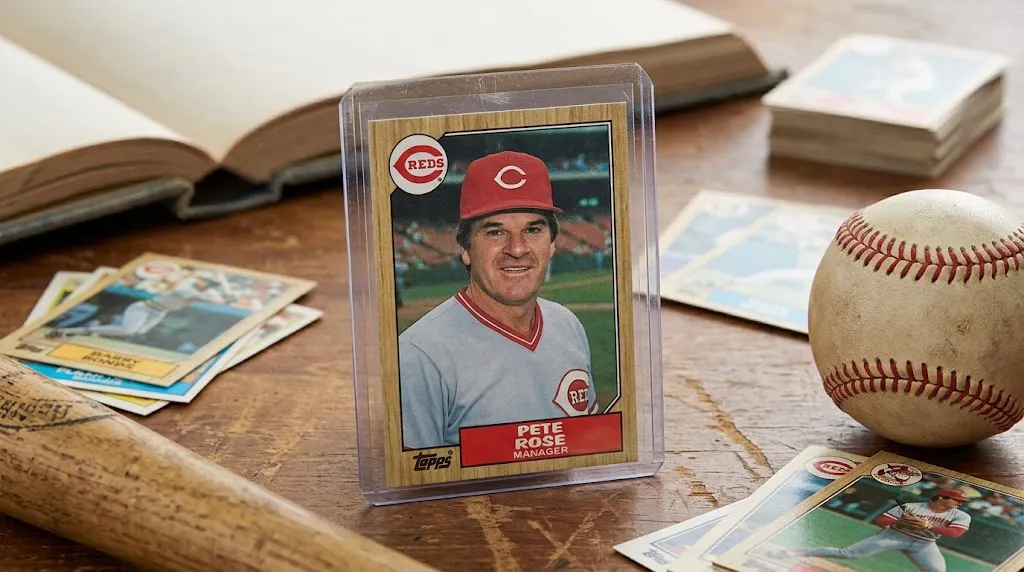
The Topps 1987 Pete Rose card is an intriguing piece of baseball-card history for collectors interested in Pete Rose, the Cincinnati Reds, classic Topps sets, and 1980s sports memorabilia. The most commonly referenced card in this context is 1987 Topps #393, which features Pete Rose in his role as manager and also serves as a team checklist card.
That distinction makes the card especially interesting for collectors. It is not a rookie card, but it represents an important stage of Rose’s baseball career while fitting into one of the most recognizable Topps baseball sets of the 1980s.
For enthusiasts who enjoy collecting sports memorabilia, the card also provides an excellent starting point for exploring the wider world of sports and athletic culture. Whether you collect by player, team, year, or card manufacturer, understanding what makes a particular issue unique can make the hobby considerably more rewarding.
What Is the Topps 1987 Pete Rose Card?
The standard Topps 1987 Pete Rose #393 card belongs to the 1987 Topps Baseball set. Card #393 identifies Pete Rose as a manager for the Cincinnati Reds and functions as a team checklist.
This is an important point for collectors because the 1987 Topps set contains many different types of cards. Alongside regular player cards, the set includes manager cards, checklists, team-related cards, and other special categories.
The 1987 Topps set is also remembered for its distinctive wood-grain design, making it instantly recognizable among collectors of late-1980s baseball cards.
Why Is Pete Rose #393 Interesting to Collectors?
Pete Rose has a distinctive place in baseball history, and cards documenting different stages of his career can appeal to collectors for different reasons. The #393 card is particularly notable because it represents Rose as a manager rather than simply as a player.
This makes it useful for several collecting themes, including:
- Pete Rose card collections
- Cincinnati Reds memorabilia
- 1987 Topps set collections
- Manager-card collections
- Baseball history collections
- 1980s sports-card collections
- Team checklist collections
Collectors who enjoy broader sports topics can also explore sports teams and competitive culture as part of a wider interest in the history surrounding professional and amateur athletics.
Topps 1987 Pete Rose #393: Manager and Team Checklist
One of the most important details about this card is its dual purpose. The 1987 Topps checklist identifies #393 as Pete Rose’s manager card, while the card also functions as part of the team’s checklist system.
Manager cards were a recognizable component of the 1987 Topps set. Instead of focusing exclusively on an active player’s statistics, these cards helped represent the managerial side of Major League Baseball and contributed to the organizational structure of the set.
For collectors building a complete 1987 Topps collection, understanding these card categories is useful because a checklist card should not automatically be treated as an ordinary player card.
Is the 1987 Pete Rose Topps Card a Rookie Card?
No. The 1987 Topps Pete Rose #393 card is not a rookie card. It is a manager/team-checklist card from the 1987 Topps Baseball set.
This distinction matters when evaluating listings online. Sellers and collectors sometimes use broad terms such as “vintage,” “rare,” or “classic” in descriptions, but those terms do not change the card’s official classification.
Anyone researching the card should therefore pay attention to the card number, set name, year, variation, and condition rather than relying solely on promotional language.
1987 Topps Pete Rose #200 vs. #393
Collectors searching for Topps 1987 Pete Rose may encounter more than one card associated with the year. The #393 manager card should not be confused with Pete Rose’s other 1987 Topps appearances.
The #393 card specifically represents Rose as the Cincinnati Reds manager. This makes it particularly useful for collectors interested in documenting different roles and stages of his baseball career.
When purchasing a card online, always confirm the card number before assuming that a listing is for #393. A simple number check can prevent confusion between different cards featuring the same player.
What Makes a Topps 1987 Pete Rose Card Collectible?
Several factors influence the desirability of a baseball card. Player recognition is only one part of the equation. The specific issue, physical condition, grade, variation, and collector demand can all contribute to how a card is perceived.
Card Condition
Condition is one of the most important considerations. Corners, edges, centering, surface quality, discoloration, creases, and printing imperfections can all affect a card’s condition.
A clean example with sharp corners and a strong surface can look considerably different from a heavily handled copy of the same card.
Centering
Centering refers to how evenly the printed design is positioned within the card’s borders. Collectors seeking professionally graded cards often pay close attention to this characteristic.
Surface Quality
Scratches, stains, print defects, marks, and other surface issues can reduce the visual appeal of a card. Collectors should inspect both the front and back whenever possible.
Corners and Edges
Sharp corners and clean edges are desirable characteristics when evaluating vintage and older sports cards. Whitening, bends, soft corners, and edge damage should be noted before purchasing.
For collectors who want to photograph and document their cards, techniques from product and lifestyle photography can also help create clearer collection records.
Topps 1987 Pete Rose Tiffany Variation
Another important point for collectors is the existence of a 1987 Topps Tiffany Pete Rose #393 version. The Tiffany issue is a separate variation and should not automatically be treated as identical to the standard base card.
This distinction becomes particularly important when comparing prices. A collector looking at a standard #393 should compare it with other standard examples, while a Tiffany example should be evaluated within the appropriate variation.
Always verify the exact issue before making a purchase, especially when a listing uses words such as “Tiffany,” “premium,” “rare,” or “limited.”
How to Identify a Topps 1987 Pete Rose #393
Before purchasing or cataloging the card, use a simple identification process:
- Confirm the year is 1987.
- Confirm the manufacturer is Topps.
- Verify the card number is #393.
- Confirm that Pete Rose is identified as the manager.
- Determine whether the card is a standard base issue or a Tiffany variation.
- Inspect the front and back for condition issues.
- Compare the card with reliable checklist information.
This approach is useful for anyone building a sports-card database or personal collection. A properly organized inventory can also make it easier to compare cards with other memorabilia.
How Much Is a Topps 1987 Pete Rose Card Worth?
The value of a Topps 1987 Pete Rose #393 card depends on its condition, grade, variation, and current market activity. Recent completed sales show that ordinary ungraded examples can sell for relatively modest amounts, while high-grade professionally graded copies can command considerably more.
For example, recent market records include low-dollar sales for ordinary examples and substantially higher prices for PSA 10 copies. This demonstrates why collectors should not use a single listing price as the definitive value of every 1987 Pete Rose #393 card.
The most useful approach is to compare completed sales of the same card and comparable condition. An asking price does not necessarily represent the amount a buyer is actually willing to pay.
Does Condition Affect the Value of Pete Rose #393?
Yes. Condition can make a major difference when collectors compare otherwise identical cards.
An ungraded card with visible corner wear may appeal to a casual collector, while a professionally graded high-condition example may appeal to collectors who focus on graded sets.
Before paying a premium, examine:
- Centering
- Corner sharpness
- Edge condition
- Surface quality
- Print quality
- Creases or bends
- Staining or discoloration
- Professional grading status
Understanding condition is particularly important when buying online because photographs can sometimes hide small defects.
Should You Get a 1987 Pete Rose Card Graded?
Professional grading may be worth considering when a card appears to have strong condition and the potential benefits justify the cost. However, not every copy needs to be graded.
For an inexpensive, heavily worn example, grading costs may represent a significant portion of the card’s market value. For an exceptionally clean example, grading may provide additional documentation of condition.
The decision should therefore be based on the individual card rather than the player’s name alone.
How to Store Your Topps 1987 Pete Rose Card
Proper storage is essential if you want to preserve a baseball-card collection over the long term. Cards should be protected from excessive moisture, heat, direct sunlight, dust, and unnecessary handling.
A protective sleeve combined with an appropriate rigid holder can provide basic protection for individual cards. Higher-value or graded cards should be stored in a secure environment where they are less likely to be bent, scratched, or exposed to damaging conditions.
Collectors should also avoid repeatedly touching the card surface. Handling cards carefully by their edges can reduce fingerprints and accidental surface damage.
Displaying Pete Rose Baseball Cards
A collection does not have to remain hidden in a storage box. Many collectors enjoy displaying selected cards as part of a sports-themed room, office, or memorabilia area.
A protective display case can provide visibility while reducing unnecessary handling. Keep displayed cards away from direct sunlight and excessive heat to help preserve their appearance.
Collectors interested in merchandising and presentation can also explore retail display and product presentation concepts when planning a larger memorabilia display.
Building a Pete Rose Baseball Card Collection
The 1987 Topps #393 card can be part of a larger Pete Rose collection rather than a standalone purchase. Collectors can organize a collection according to different themes.
Popular organizational approaches include:
- Collecting Pete Rose cards by year
- Collecting Cincinnati Reds cards
- Collecting Topps issues
- Collecting manager cards
- Collecting graded examples
- Collecting different variations
- Building complete baseball-card sets
A year-by-year approach can make it easier to understand how a player’s cards changed over time. A team-focused collection, meanwhile, can provide a broader historical picture of the Cincinnati Reds.
Sports enthusiasts who collect memorabilia can also explore sports equipment and outdoor sports culture as part of a broader sports-interest collection.
Why 1980s Baseball Cards Remain Popular
The 1980s produced a memorable era of baseball-card collecting. Bold designs, colorful photography, recognizable players, and widely distributed card products helped create a strong collecting culture.
The 1987 Topps design is especially recognizable because of its wood-grain visual style. The design itself can trigger nostalgia for collectors who grew up during the period or later became interested in vintage sports cards.
For some collectors, the appeal is financial. For others, it is historical, nostalgic, or simply the enjoyment of completing a set.
The wider sports landscape has also continued to evolve, as demonstrated by the growing interest in modern competitive sports and esports.
Common Mistakes When Buying a 1987 Pete Rose Card
Confusing the Base Card With Tiffany
One of the easiest mistakes is assuming that every #393 card is the same. Always identify whether the card is a standard Topps issue or a Tiffany variation.
Relying on Asking Prices
An unsold listing can be priced much higher than actual completed sales. Review completed transactions whenever possible.
Ignoring Condition
Two copies of the same card can have very different appearances and market appeal because of differences in condition.
Assuming Famous Players Always Mean Rare Cards
A famous player does not automatically make every card rare. Scarcity, production, condition, variation, and demand all matter.
Not Checking the Card Number
When multiple cards from the same year feature the same player, verifying the card number is one of the simplest ways to avoid purchasing the wrong issue.
How to Photograph Your Pete Rose Card
Good photographs can be useful when cataloging, insuring, selling, or simply documenting a collection. Photograph the card against a clean background with balanced lighting.
Capture both the front and back, and take close-up images of any condition issues that could affect evaluation.
A consistent photography system can make a large collection much easier to organize and compare. Collectors interested in visual presentation can also explore personal style and presentation concepts when designing a memorabilia display.
Is the Topps 1987 Pete Rose Card a Good Collectible?
The answer depends on the collector’s objective. Someone building a complete 1987 Topps set may value #393 because it fills an important place in the checklist. A Pete Rose fan may appreciate it because it represents Rose as a manager. A Cincinnati Reds collector may want it as part of a team-focused collection.
Its significance therefore does not have to depend entirely on a high monetary value. Sports cards can have historical, nostalgic, and personal collecting value as well.
Readers interested in the broader role of sports in everyday life can also explore sports conditioning and athletic culture.
Topps 1987 Pete Rose: A Memorable Piece of Baseball Card History
The Topps 1987 Pete Rose #393 card is an interesting collectible because it captures Pete Rose in his role as manager of the Cincinnati Reds while also serving as a team checklist card.
It is not a rookie card, and collectors should not assume that every copy has the same market value. Instead, the card should be evaluated according to its exact issue, condition, grade, variation, and current completed-sale activity.
For collectors building a Pete Rose, Cincinnati Reds, or 1987 Topps collection, #393 can provide an interesting piece of the larger story. Its classic 1980s Topps design also gives it a recognizable place among baseball cards from the era.
Whether you collect for nostalgia, set completion, baseball history, or personal interest, careful identification and preservation can make the experience much more rewarding.
Frequently Asked Questions
What is the 1987 Topps Pete Rose card number?
The Pete Rose manager/team-checklist card in the standard 1987 Topps set is #393.
Is Topps 1987 Pete Rose #393 a rookie card?
No. The #393 card is a manager/team-checklist card and is not Pete Rose’s rookie card.
What team is featured on the 1987 Pete Rose #393 card?
The card is associated with Pete Rose’s role as manager of the Cincinnati Reds.
Does a 1987 Topps Pete Rose Tiffany card exist?
Yes. A 1987 Topps Tiffany version of Pete Rose #393 exists and should be distinguished from the standard base issue.
What affects the value of a Pete Rose #393 card?
Condition, centering, surface quality, corners, edges, grading, variation, and current collector demand can all affect market value.
How should I store a 1987 Pete Rose card?
Use a protective sleeve and suitable rigid holder, and keep the card away from moisture, direct sunlight, excessive heat, and unnecessary handling.
Final Thoughts
The Topps 1987 Pete Rose card #393 is a memorable piece of 1980s baseball-card history. Its manager and team-checklist role gives it a different collecting identity from a conventional player card, while Pete Rose’s prominence makes it a natural choice for collectors focused on baseball history and Cincinnati Reds memorabilia.
For the best collecting experience, identify the exact card, distinguish the base issue from variations, examine condition carefully, compare completed sales, and protect the card properly. Those simple steps can help turn a single vintage card into a meaningful part of a well-organized sports collection.