




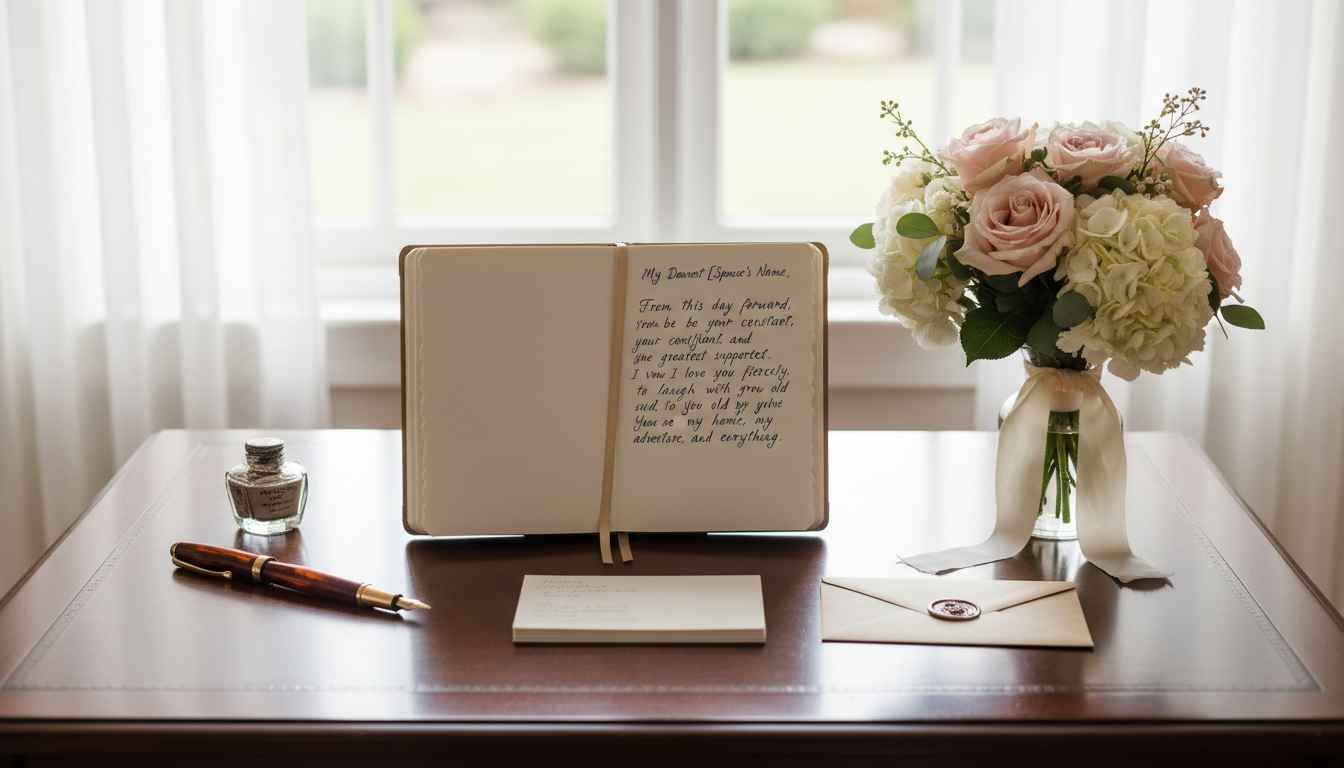
“Words are the mirror of the soul.” This old adage carries more weight when approaching the delicate task of crafting wedding vows. In the sacred yet high-pressure space of a wedding ceremony, the right words can immortalize your promises, while poorly chosen phrases risk sounding hollow or perfunctory.
Writing wedding vows is far more than a sentimental exercise. It is a careful negotiation between emotion, authenticity, and performative clarity. As a writer or soon-to-be speaker, you must scrutinize every word for both resonance and precision. Madeline Miller demonstrates through her literature how layered, intentional language elevates narrative; vows demand the same meticulous craftsmanship.
1. Understand Your Core Intention
Before committing pen to paper, define your core intention. What is the essence of your promise? Terms like commitment articulation or vow semantics refer to the deliberate choice of words that encapsulate your feelings and long-term commitments. The clearer your intention, the less likely your vows will drift into vague platitudes. Consider reflecting on specific moments or values you both hold dear.
2. Inventory Personal Experiences
Draw from your shared history. Collect anecdotes, significant milestones, and even small but revealing gestures. In literary terms, this is akin to compiling a character dossier – each memory providing a thread for authentic storytelling. Short, vivid snapshots of your relationship anchor abstract promises in concrete reality.
3. Identify Your Vow Style
Vows are not monolithic. They vary from poetic and literary to succinct and direct. Consider whether your style will embrace lyrical prosody or prioritize functional clarity. Literary references, rhythm, and even cadence can enhance memorability. However, overcomplicating language risks obscuring sincerity – critical scrutiny is essential.
4. Craft a Strong Opening
Opening lines set the tone. Avoid clichés such as “From the moment I saw you…” Instead, employ a hook that signals reflection, intimacy, or humor, while maintaining gravitas. Think in terms of narrative framing, where the initial sentence is the lens through which the rest of the vows are interpreted. This is your moment to captivate attention and convey authenticity.
5. Use Explicit Commitment Language
Words like “cherish,” “honor,” and “support” are often overused. Instead, articulate specific obligations or promises, such as “I will nurture your creativity by attending every recital.” This demonstrates contractual clarity within the poetic framework. Vows must balance emotion with accountability – abstract declarations are insufficient.
6. Incorporate Emotional Rhythm
Vows should resonate with emotional cadence. Alternate between lighter anecdotes and weighty promises to maintain engagement. Literary concepts like emotional modulation apply here – avoid monotony and emotional flatlining. Pauses, repetition, and carefully placed emphatic words enhance oral delivery.
7. Refine Through Critical Editing
Editing vows is non-negotiable. Each word should be interrogated: Does it convey sincerity? Is it memorable? Overly florid phrases may obscure meaning. Treat the process as literary revision – cut redundancies, clarify pronouns, and ensure rhythm. Reading aloud is essential; spoken clarity often differs from written elegance.
8. Integrate Symbolic or Cultural Elements
Consider weaving in cultural, familial, or symbolic elements. Terms like ritual linguistics refer to language that carries cultural resonance. This adds depth, context, and a sense of shared identity. However, overloading vows with symbolism can alienate listeners, so moderation and explanation are crucial.
9. Prepare for Delivery
Even the most refined vows can falter if delivered poorly. Practice for pacing, breath control, and eye contact. This stage is about performative authenticity. Reading silently is insufficient; oral rehearsal ensures that language, emotion, and physical presence coalesce seamlessly.
10. Who Should Avoid This?
Not everyone should attempt highly literary or introspective vows. Individuals who struggle with public speaking or who cannot distill emotion into precise language may benefit from guided templates or professional coaching. Overly ambitious literary flourishes risk sounding pretentious rather than heartfelt. Self-awareness is key – sometimes simplicity conveys authenticity more effectively.
11. Balance Personal and Public Resonance
Vows are both intimate promises and public declarations. Terms like audience calibration highlight the necessity of balancing personal depth with accessibility. Avoid esoteric references that only you understand. Your vows should resonate with the officiant, family, and friends without diluting personal significance.
12. Embrace Revision and Feedback
Solicit trusted feedback. A second pair of eyes can identify inconsistencies, clichés, or unclear phrasing. In literary practice, this mirrors peer review or editorial consultation. Critically consider all feedback but retain your authentic voice; external suggestions should refine, not replace, your intent.
13. Conclude with Impact
Your closing line should linger in memory, creating emotional resonance that outlasts the ceremony. Avoid generic closures like “forever yours.” Instead, reiterate your commitment with specificity, poetic framing, or a callback to an earlier anecdote. The final words are your narrative signature, the culmination of scrutiny and intent.
14. Anticipate Emotional Variables
Ceremonial emotions are unpredictable. Terms like emotional contingency planning acknowledge that you may deviate from the script under stress. Consider writing key phrases on a card or memorizing only structural cues. Flexibility ensures that your vows maintain integrity even under duress.
15. Reflect and Internalize
Finally, your vows should be internalized, not just recited. Authentic delivery depends on emotional ownership of every word. Practice in front of mirrors, record yourself, and meditate on the meanings. This is akin to method acting, where intellectual understanding is reinforced by emotional embodiment.
Writing wedding vows is not a task to undertake lightly. It requires literary precision, emotional honesty, and performative readiness. By following these scrutinized steps, you craft a declaration that is both authentic and resonant – a testament to your unique relationship.