




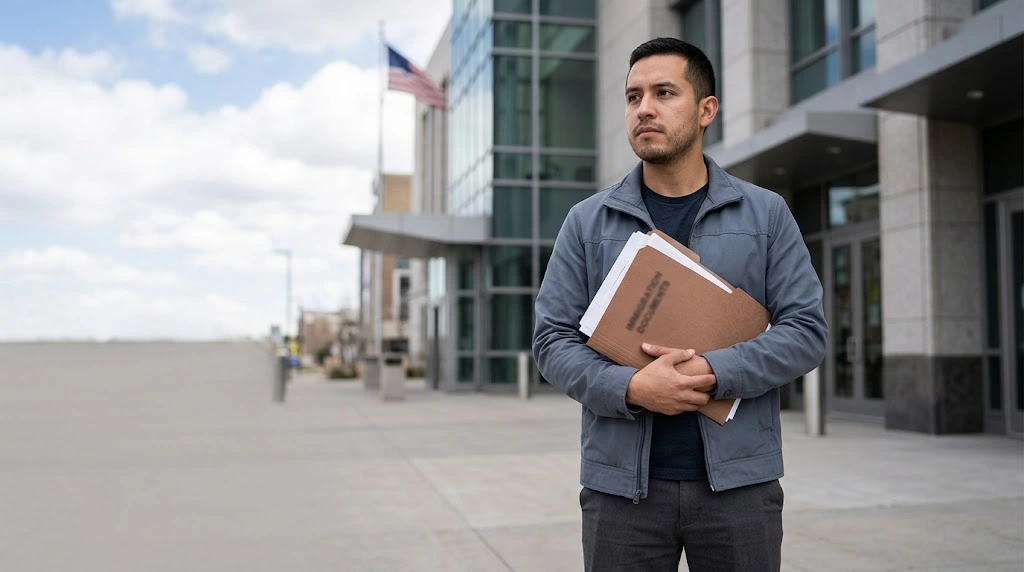
DACA legal challenges remain a major concern for Dreamers in 2026 as court proceedings and federal policy continue to shape the program’s future. Deferred Action for Childhood Arrivals (DACA) does not provide lawful immigration status, but it has allowed eligible recipients to receive deferred action from removal and employment authorization in two-year periods.
What Is DACA?
Deferred Action for Childhood Arrivals was introduced in 2012 as an exercise of prosecutorial discretion. The program was designed for certain undocumented immigrants who came to the United States as children and who met specific eligibility requirements.
DACA does not itself create lawful immigration status. Instead, it provides deferred action from removal for a specified period and can be accompanied by employment authorization for eligible recipients. USCIS guidance describes DACA as a two-year form of deferred action rather than lawful permanent status.
This distinction is important because having DACA is not the same as having a green card, citizenship, or another permanent immigration status.
Why Is DACA Facing Legal Setbacks?
The program has been involved in years of federal litigation. Courts have examined whether the executive branch had authority to establish and maintain DACA and whether the program complied with federal administrative law.
More recent litigation has continued to create uncertainty about the program’s long-term future. The result is a complicated environment in which current recipients may continue to receive certain benefits while the legal foundation and future availability of the program remain contested.
That distinction matters. A court decision, an administrative policy change, and the expiration of an individual recipient’s DACA period can have very different consequences.
Current DACA Status in 2026
As of August 2026, USCIS states that it continues to accept both initial and renewal DACA requests. However, USCIS cannot approve initial DACA requests or associated employment authorization under the existing court order. Renewal requests continue to be adjudicated according to existing policy.
This means people should not assume that a person who has never previously received DACA can obtain an initial approval simply because USCIS accepts the paperwork.
For current recipients, renewal remains particularly important. USCIS recommends that recipients file renewal requests well before their current period expires. The agency’s guidance has historically recommended submitting the renewal approximately 120 days before expiration to reduce the risk of a lapse.
What the Legal Uncertainty Means for Dreamers
The biggest problem created by continuing litigation is uncertainty. Dreamers may have to make decisions about employment, education, housing, travel, family planning, and other aspects of their lives while the underlying legal situation remains unsettled.
A person with current DACA may have a different situation from someone whose DACA has expired. Similarly, someone with a pending renewal may face different considerations from someone who has never received DACA.
Because immigration consequences can be highly individual, a general news article cannot determine whether a particular person remains protected or what alternative immigration options may be available.
Employment Authorization Is a Major Concern
Employment authorization is one of the most significant practical benefits associated with DACA. A current recipient generally relies on the related employment authorization document to demonstrate employment eligibility under the applicable rules.
USCIS notes that the employment authorization application connected with DACA is adjudicated in connection with the underlying deferred-action request.
This is why renewal timing matters. A delay or lapse can create serious practical problems for someone whose job depends on valid employment authorization.
Why DACA Recipients Should Track Their Expiration Dates
Current recipients should know the expiration date printed on their DACA and employment authorization documents. Waiting until the last moment can create unnecessary pressure if additional information or processing time is required.
USCIS recommends filing renewal requests approximately four months before the existing DACA period expires. Recipients should also monitor official USCIS notices and case-status information rather than relying solely on social-media posts or third-party summaries.
What If a DACA Renewal Is Delayed?
Processing delays have historically created significant concerns for recipients. USCIS provides case-status and case-inquiry tools that allow applicants to monitor pending cases and determine whether an inquiry may be appropriate.
USCIS currently indicates that DACA renewal applicants may contact the agency about a case that has been pending for more than 105 days.
Applicants should keep their receipt notices and other case documents available when checking a pending renewal. An immigration attorney or accredited representative can also help determine whether a particular delay requires additional action.
Travel Can Create Additional Immigration Risks
DACA recipients should be particularly careful about international travel. DACA itself does not automatically provide permission to leave and reenter the United States.
Travel-related immigration issues can become complicated very quickly, especially for someone who has other immigration violations, prior removal proceedings, criminal history, or other factors affecting admissibility.
A recent 2026 case involving a Texas DACA recipient illustrates how serious travel and removal issues can become. The Associated Press reported that Jessica Treviño, a DACA recipient who had permission to remain and work in the United States through April 2027, was deported to Mexico in March 2026 and later challenged the termination of her DACA status in federal court.
Individual cases should not be treated as universal rules. However, they demonstrate why DACA recipients should obtain individualized legal advice before making decisions involving international travel or other potentially consequential immigration actions.
Does DACA Provide a Path to Citizenship?
DACA itself does not provide a direct path to U.S. citizenship. It also does not automatically provide lawful permanent residence.
Some DACA recipients may have other possible immigration options depending on their family relationships, employment circumstances, humanitarian factors, prior immigration history, or other eligibility requirements. Those possibilities must be evaluated individually.
A person should therefore avoid assuming that DACA is either a permanent solution or the only immigration option available to them.
How Dreamers Can Respond to the Uncertainty
Although Dreamers cannot control federal litigation, they can take practical steps to stay informed and protect their records.
- Track DACA expiration dates: Know when both deferred action and employment authorization expire.
- File renewals early: USCIS recommends filing approximately 120 days before expiration.
- Save immigration records: Keep copies of applications, notices, work permits, and supporting documents.
- Monitor official updates: Use USCIS rather than social media as the primary source for case information.
- Be cautious about travel: Obtain qualified immigration advice before leaving the United States.
- Review other options: An immigration professional can determine whether another form of relief may be available.
- Do not ignore notices: Respond to USCIS or court correspondence within the applicable deadlines.
The Importance of Qualified Immigration Legal Advice
DACA litigation can be difficult to understand because court orders, agency policies, individual case circumstances, and federal immigration law can interact in complicated ways.
A qualified immigration attorney or accredited representative can review a person’s specific history rather than applying a general headline to their situation. This can be especially important when someone has a criminal record, prior removal proceedings, international travel, a pending immigration application, or questions about eligibility for another immigration benefit.
RenewWire also covers legal-service topics, including guidance on urgent legal needs, which may be useful to readers exploring broader legal-service information.
What Dreamers Should Watch Next
The future of DACA depends on continuing litigation, court orders, federal agency implementation, and potential action by Congress. Because these developments can change the practical rules, older articles may become inaccurate even when they accurately described the program when published.
For that reason, readers should check the latest USCIS information when making decisions about renewals, employment authorization, travel, or other immigration matters. USCIS remains the authoritative source for current agency procedures and individual case-status information.
Frequently Asked Questions About the DACA Legal Setback
Is DACA still available in 2026?
DACA remains operational for current recipients and renewal processing, but USCIS cannot currently approve initial DACA requests. USCIS continues to accept initial requests while following the court-related restrictions on approval.
Can current DACA recipients renew?
Yes. USCIS continues to process renewal DACA requests under its existing policy. Recipients should follow the current USCIS renewal instructions and avoid waiting until the last minute.
Does DACA give someone lawful immigration status?
No. USCIS describes DACA as an exercise of prosecutorial discretion and states that it does not provide lawful immigration status.
Can someone with DACA travel outside the United States?
International travel can carry serious immigration consequences. Anyone considering travel should review the current rules and obtain individualized legal advice before leaving the United States.
Should Dreamers rely on news reports about court decisions?
News coverage can help explain developments, but individual immigration decisions should be based on current official agency information and, when appropriate, advice from a qualified immigration professional.
Final Thoughts
The current DACA legal setback should be understood as an ongoing legal and policy issue rather than a simple announcement that every Dreamer immediately loses protection. In 2026, USCIS continues to process DACA renewals while initial requests remain subject to court-related restrictions.
For current recipients, staying ahead of renewal deadlines, preserving immigration records, monitoring official USCIS updates, and seeking individualized legal advice when necessary are among the most practical steps available. The broader future of DACA remains tied to litigation and federal policy, making reliable and current information especially important for Dreamers and their families.
This article is for general informational purposes and is not legal advice. Immigration rules and court orders can change, and individual cases may have different facts and consequences.