




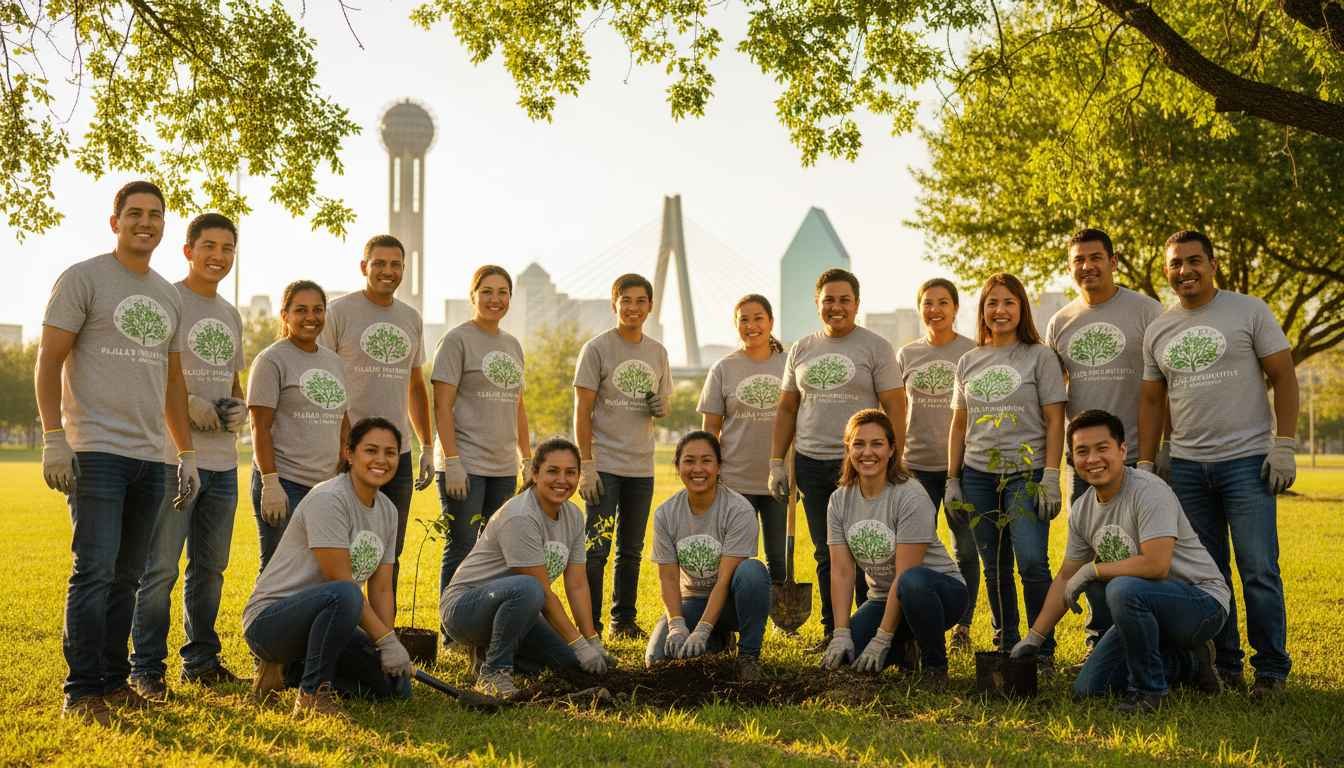
You want work that means something — and Dallas, with its large and varied nonprofit sector, is a strong place to look. From food banks and housing programmes to education, health, and the arts, the city’s nonprofits employ thousands of people in roles that range from front-line coordination to executive leadership.
This guide explains what nonprofit jobs in Dallas actually involve, which roles are hiring, what the pay and trade-offs look like, and how to apply in a way that gets noticed.
What Nonprofit Work in Dallas Looks Like
Dallas has a deep nonprofit landscape. Large organisations run citywide programmes in hunger relief, homelessness, and healthcare; mid-sized groups focus on neighbourhoods, schools, or specific communities; and small grassroots nonprofits work on a single issue with a handful of staff. Many roles are based in the city itself, while others cover the wider Dallas–Fort Worth area.
The work is mission-driven, which shapes everything about it: teams are often small, budgets are tight, and one person may cover several functions. That can be energising if you like variety and ownership — and exhausting if you expect a narrow, predictable job description.
Common Roles and What They Actually Do
- Program coordinator: runs day-to-day services — scheduling, volunteers, partners, and reporting. The most hands-on role, and the best entry point for many people.
- Grant writer: researches funders and writes proposals that keep programmes funded. Strong writing and attention to detail matter more than any single qualification.
- Development and fundraising officer: builds donor relationships, plans campaigns, and manages events. Results are measurable: money raised and donors retained.
- Communications and marketing: tells the organisation’s story through social media, newsletters, and the press, and keeps supporters engaged.
- Operations and finance: budgets, compliance, HR, and systems — the work that keeps a nonprofit running legally and smoothly.
- Executive director: leads strategy, fundraising, and the board relationship. Usually reached after years in the sector, often starting in programme or development roles.
Skills That Get You Hired
Nonprofits hire for practical ability more than for prestige credentials. The skills that consistently open doors are grant writing, data and reporting (tracking outcomes for funders), volunteer coordination, community outreach, and clear written communication. Bilingual English–Spanish ability is a genuine advantage in Dallas, where many programmes serve Spanish-speaking communities. Experience matters — and volunteering with an organisation is one of the most reliable ways to gain it and to be remembered when a paid role opens.
Pay and Expectations, Honestly
Be clear-eyed about the trade-offs. Nonprofit salaries in Dallas are often lower than corporate pay for comparable skills, especially in smaller organisations, and some roles depend on grant funding that is renewed year to year. Benefits such as health cover and flexible working can partly offset the gap, but they do not always do so.
The other trade-off is emotional. Mission-driven work can blur the line between job and calling, and burnout is a real risk when the need never ends. The people who last in the sector set boundaries, take their leave, and treat rest as part of the job — not as a luxury. Before accepting a role, ask about funding stability, typical hours, and how the team handles cover when someone is away.
Where to Find Openings
Start with the specialist boards: Idealist lists nonprofit jobs, internships, and volunteering opportunities across the US, and general boards such as LinkedIn and Indeed carry many Dallas nonprofit postings too. Also check the careers pages of organisations you admire directly — smaller nonprofits often post there before anywhere else — and look at local nonprofit networks and associations, which sometimes run their own job boards. Volunteering, attending community events, and joining local professional groups in the sector are often how people hear about roles before they are advertised.
Applying Well
- Tailor every application: show you understand this organisation’s mission and its community, not nonprofits in general. Name a programme or outcome you admire and say why it matters to you.
- Show measurable results: “coordinated 40 volunteers for a weekly food distribution serving 300 households” tells a hiring manager far more than “passionate about helping people.”
- Keep the cover letter short and specific: one page, one clear story about why this role and this organisation, and what you would actually do in the first months.
- Prepare for mission questions: interviewers will ask why this cause and why now. A genuine, specific answer beats a polished generic one.
Nonprofit work is community work at its core — the same community ties that hold families together through hard times, explored in this look at American families and modern family life.
Who This Path Suits — and Who It Does Not
This path suits people who are motivated by visible impact, comfortable with variety and ambiguity, and willing to trade some pay for purpose and flexibility. It suits people who can set boundaries, because the work will take everything you give it.
It does not suit people who need predictable schedules, guaranteed bonuses, or a strict corporate ladder. If you require constant financial reassurance or struggle with unclear priorities, a nonprofit role is likely to frustrate you — and that is useful to know before you apply rather than after you start.
FAQ: Non Profit Organization Jobs Dallas TX
Do you need a specific degree for nonprofit work?
Not usually. Relevant experience, volunteering, and demonstrable skills — writing, fundraising, programme coordination — matter more than a particular degree, though some roles in health or education have specific requirements.
Can you move from a corporate job into a nonprofit?
Yes, and many people do. Highlight transferable skills — project management, budgeting, data, communications — and show genuine engagement with the mission, ideally through volunteering, before you apply.
Are nonprofit jobs in Dallas competitive?
Popular roles at well-known organisations attract many applicants, while smaller and less visible nonprofits often struggle to find the right people. Applying broadly, including to smaller organisations, improves your chances.
How do I get started with no nonprofit experience?
Volunteer first — even a few hours a week — with an organisation whose work you care about. It builds relevant experience, references, and contacts, and it shows hiring managers you understand the sector.
Final Thoughts
Non profit organization jobs in Dallas TX offer something a paycheque alone cannot: work whose results you can see in your own city. Go in with open eyes — the pay is often modest, the funding can be uncertain, and the work asks a lot. But if you choose a role that fits your skills, apply with specific evidence rather than general enthusiasm, and protect your own boundaries, a nonprofit career in Dallas can be both professionally rewarding and personally meaningful.